Helmsley: Something for Everyone

Helmsley is a small market town in North Yorkshire that has everything you need for the perfect day out or weekend trip. It has lovely restaurants, shops, a fabulous spa, as well as plenty of interesting things to go and visit including a castle and an art gallery. But be warned, Helmsley may wake up all quiet and sleepy, but by lunchtime on any sunny day it will have attracted the crowds!
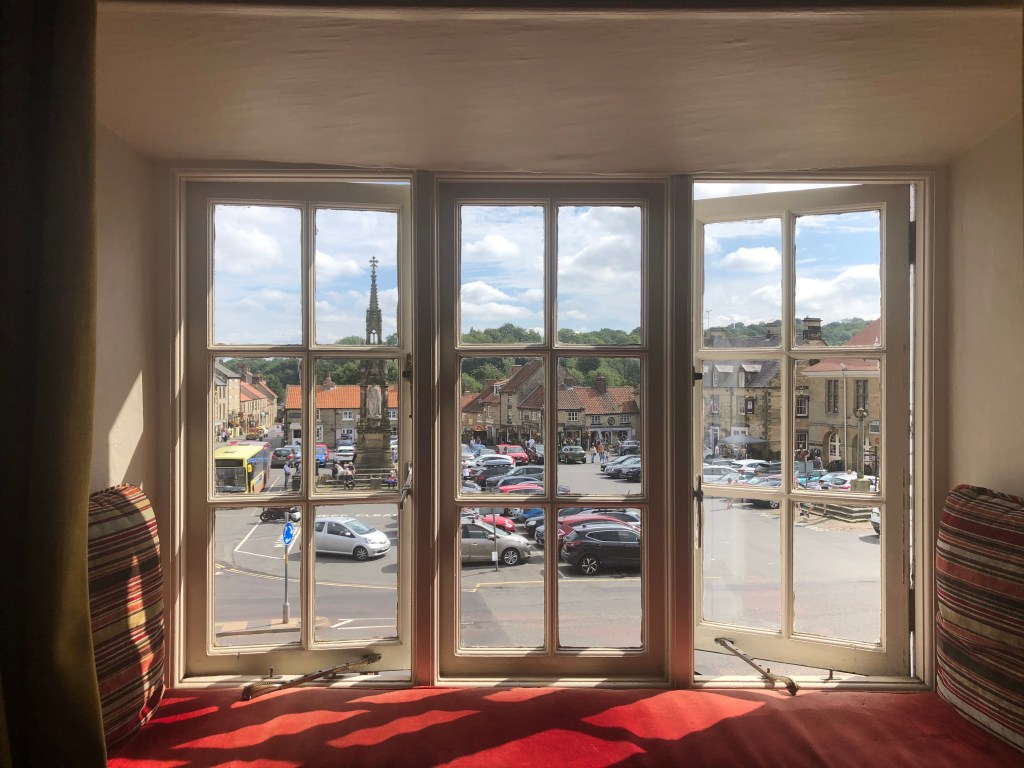
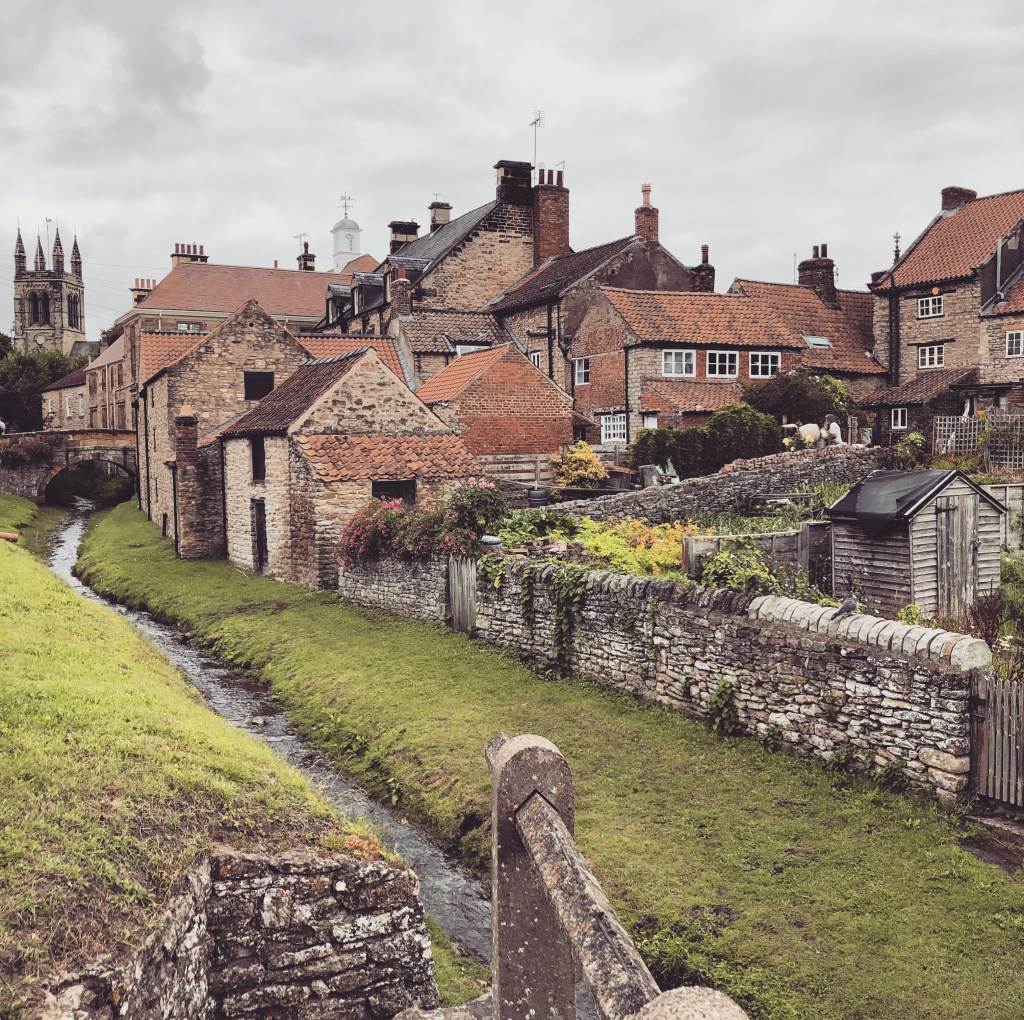
The view from The Black Swan

When you arrive in Helmsley, the first thing you will see (because it’s huge) is the Feversham Monument situated in the centre of the market square. Grab an ice cream and sit on the steps of the monument to people watch. On Fridays the local street market held here if you want to pick up a souvenir from your trip.

Also, quick note, the square is the only place in Helmsley you have to pay for parking – try to get yourself on a side street or up on the cobbles up in front of Browns. Another tip is to arrive after 5pm, if you are staying the night, as many of the people who work in Helmsley will have left for the day so there will be more available spaces.
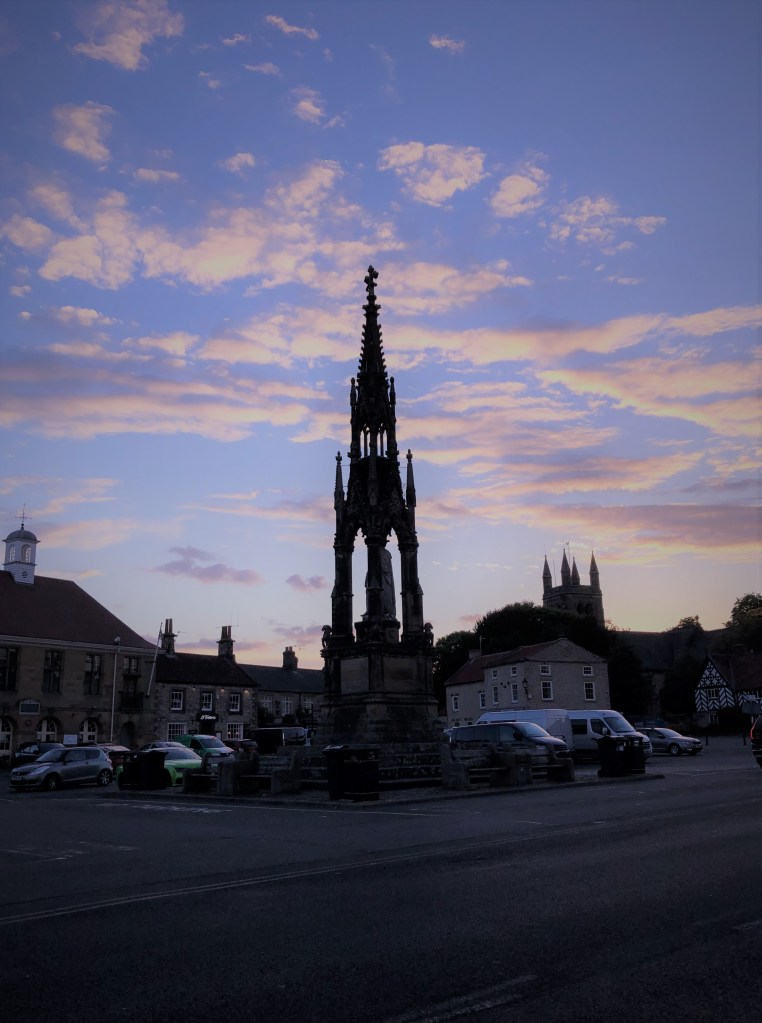
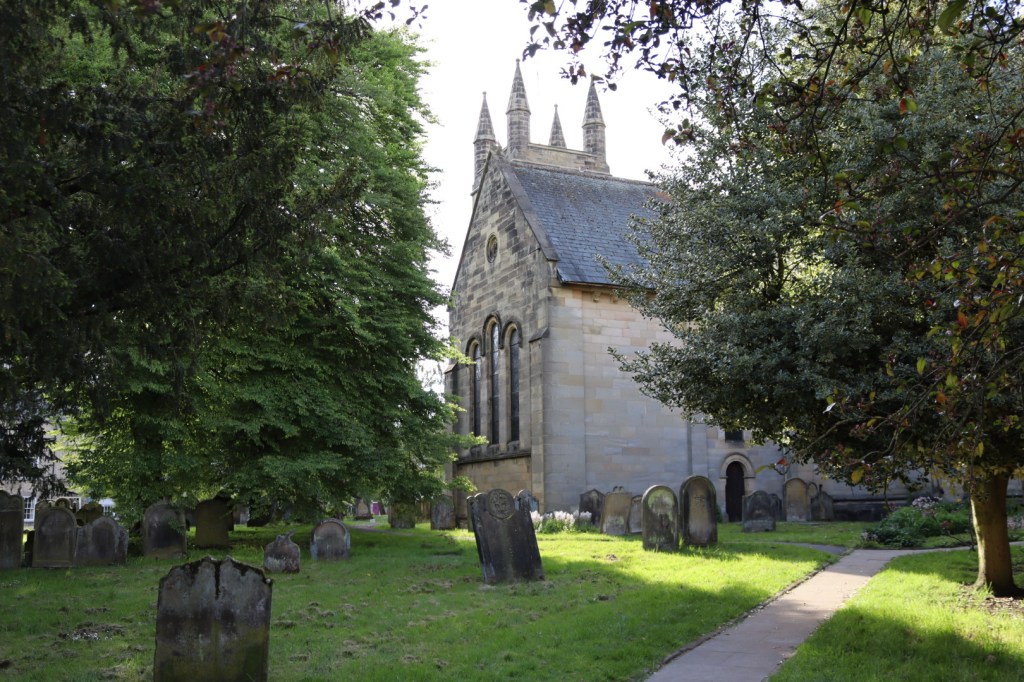
Set around the square are some of the restaurants, pubs and hotels in Helmsley: it’s small and picture-perfect. For a walking tour that allows you to see the sights, I suggest that you walk away from the monument up towards The Black Swan hotel (which has a nice beer garden out the back), go left and into the church yard. Walk through here, past all the graves and the church (anyone else like looking at names on graves?!), and leave through the gate at the back of the yard onto Canons Garth. Turn left and walk towards the Feversham Arms (where the lovely spa, including rooftop pool, can be found) and onto Church Street. Have a walk round here – the houses are lovely.
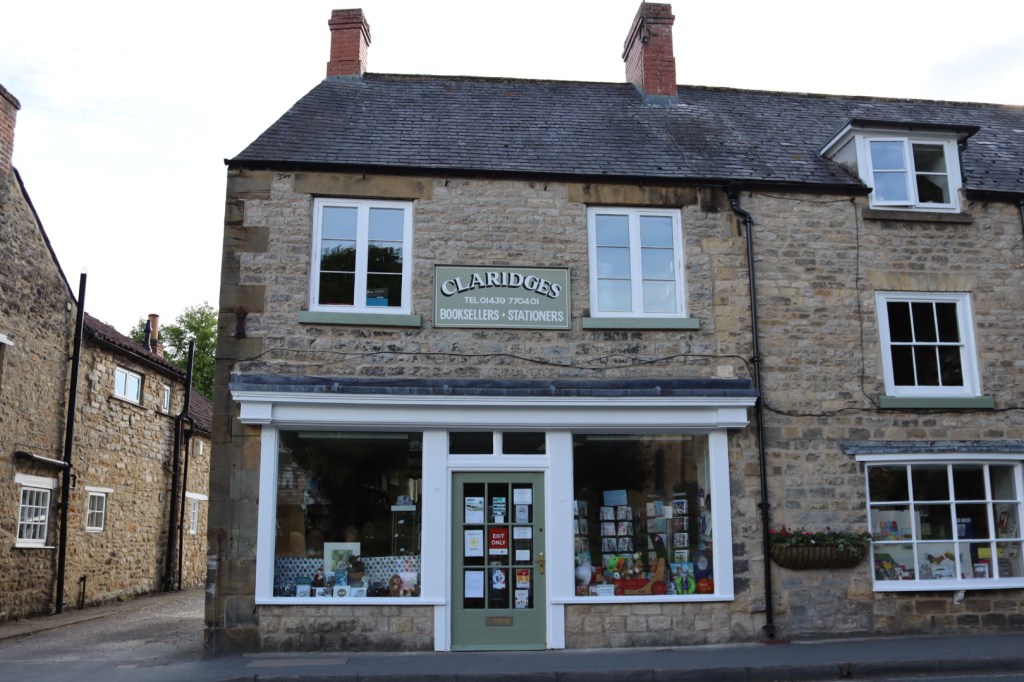
When you’re ready, make your way back down Church Street towards the direction of the square. At Claridges Book Shop you can stop a little rummage amongst the shelves. Keep going down this street which turns into Castlegate and have a pause to watch the little stream that runs down between the side of the road and the houses on the other bank.
Here you will also have a pick of tearooms and cafes for a quick rest stop and a scone.

Back out on Castlegate, as the name suggests, you are now near the atmospheric ruins of Helmsley Castle (and the tourist office) complete with deep banks where the moat once was. A bit further out past the Castle is the Helmsley Walled Garden a must-see for all those with green-fingers.

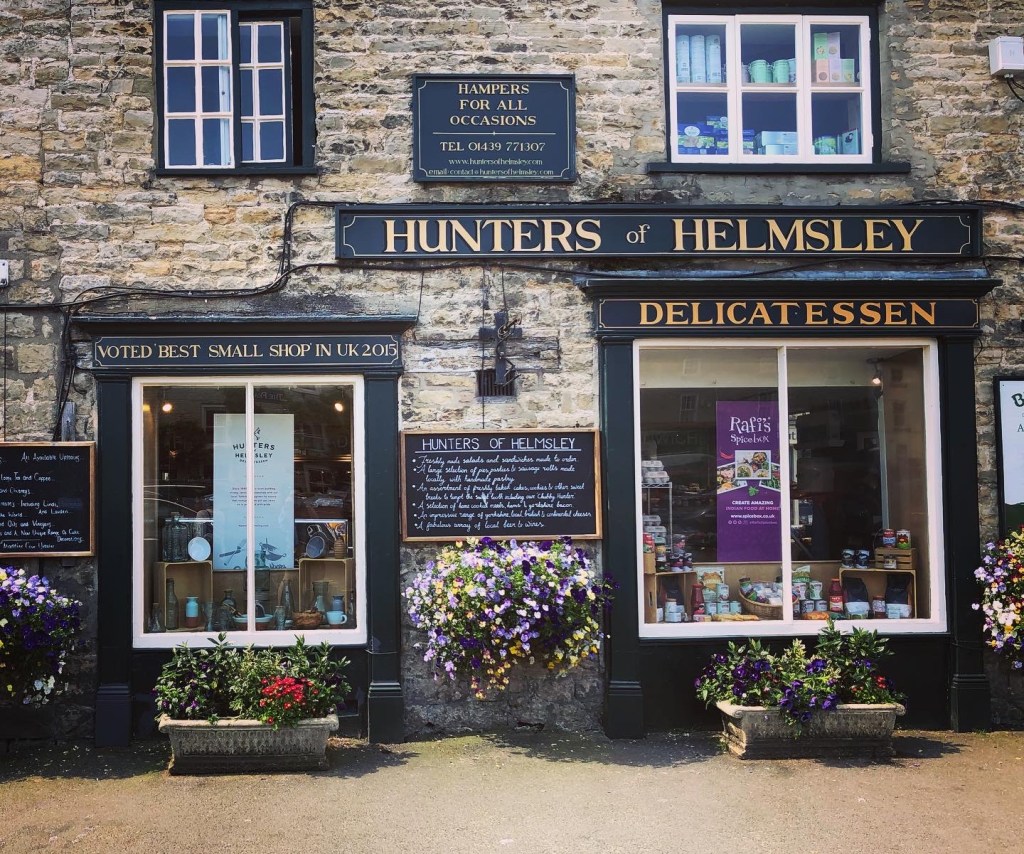
Once you’ve seen these, walk back on yourself to come back to the road for a short walk on Castlegate to find yourself at the Helmsley Brewing Company (where tours run on Wednesdays). Otherwise, come out onto Bridge Street and walk back up towards the market square. Make sure to have a look in Hunters of Helmsley, a food shop with all sorts of fantastic things on sale. Also, be sure to call in at The Oak pub for a proper pint.
As well as all the above, Helmsley also has Duncombe Park (the historic house and over 450 acres of estate belonging to the Duncombe family), the National Centre for Birds of Prey, and an art gallery. It really does offer something for everyone!

For food in Helmsley there are plenty of places to choose from but try to book in advance as it is so popular. For the fish and chip fanatics, you will love Helmsley – there’s Scott’s Fish and Chips and Deep Blue. Helmsley Spice serves up delicious curries and La Trattoria’s pizzas are divine. For breakfast try Café on the Square for very reasonably priced full Englishes or pancakes.

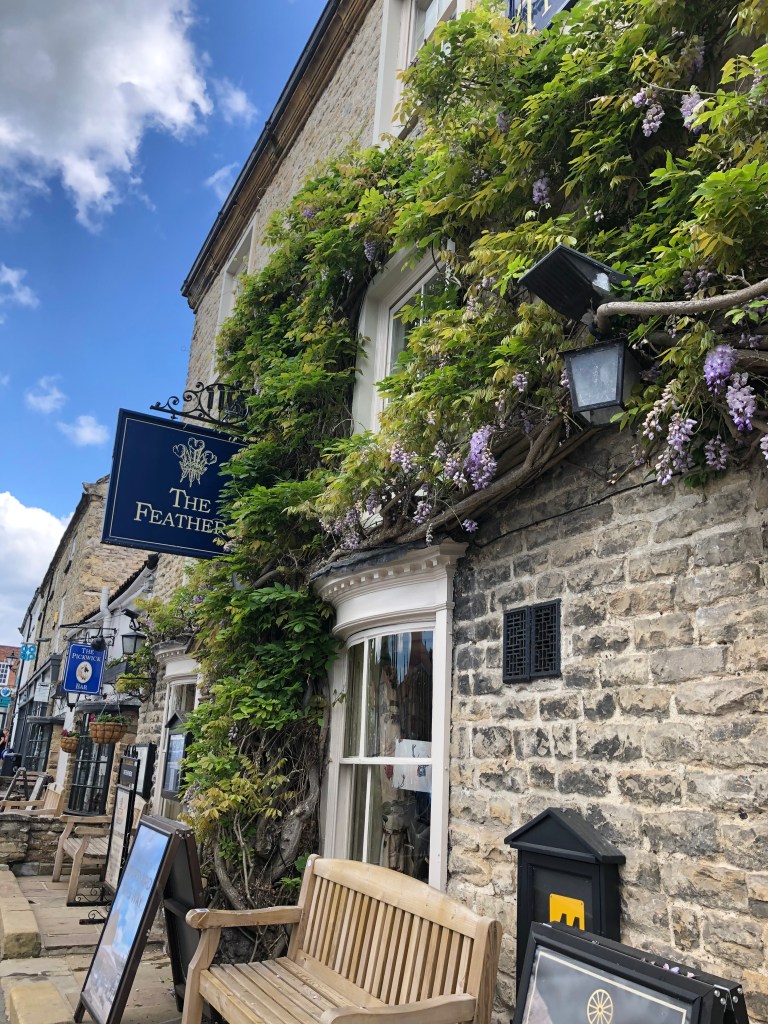
The Black Swan and The Feathers also have very good restaurants and, having stayed at both, they are lovely places to spend the night.
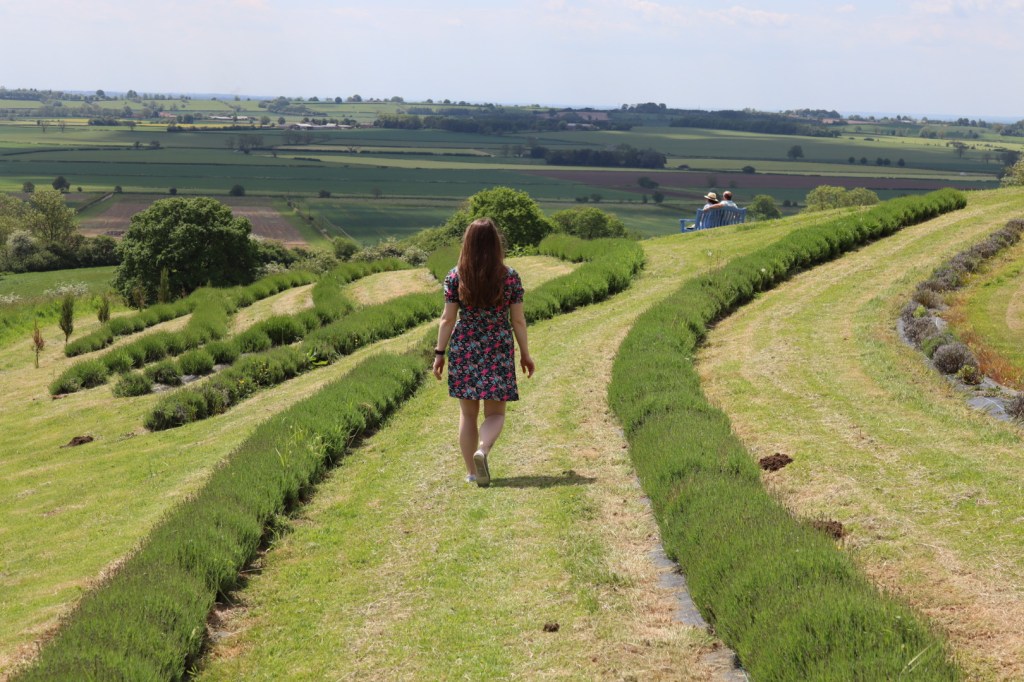
Eaten and walked your way round Helmsley but still want more? Helmsley is around an hour’s drive to Whitby or Filey for some sea and sand (I can’t promise the sun). York city centre is about a 50-minute drive for more history, art and culture. For something a bit different, head over to Yorkshire Lavender, a 25-minute drive away, to get lost in lavender mazes and stare out with a cuppa over some stunning Yorkshire scenery.
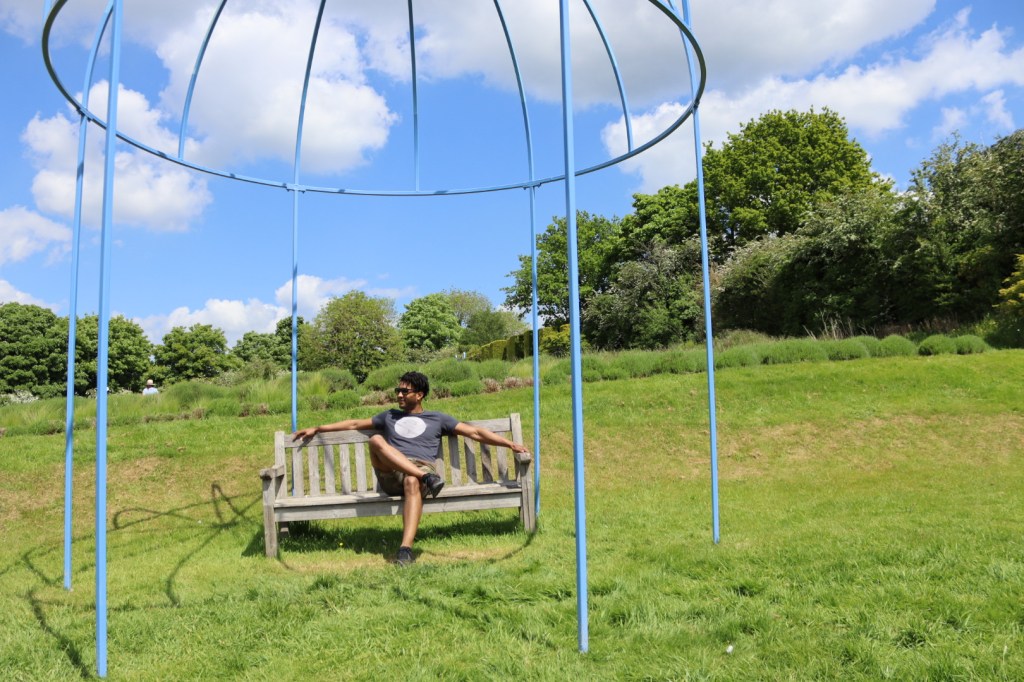
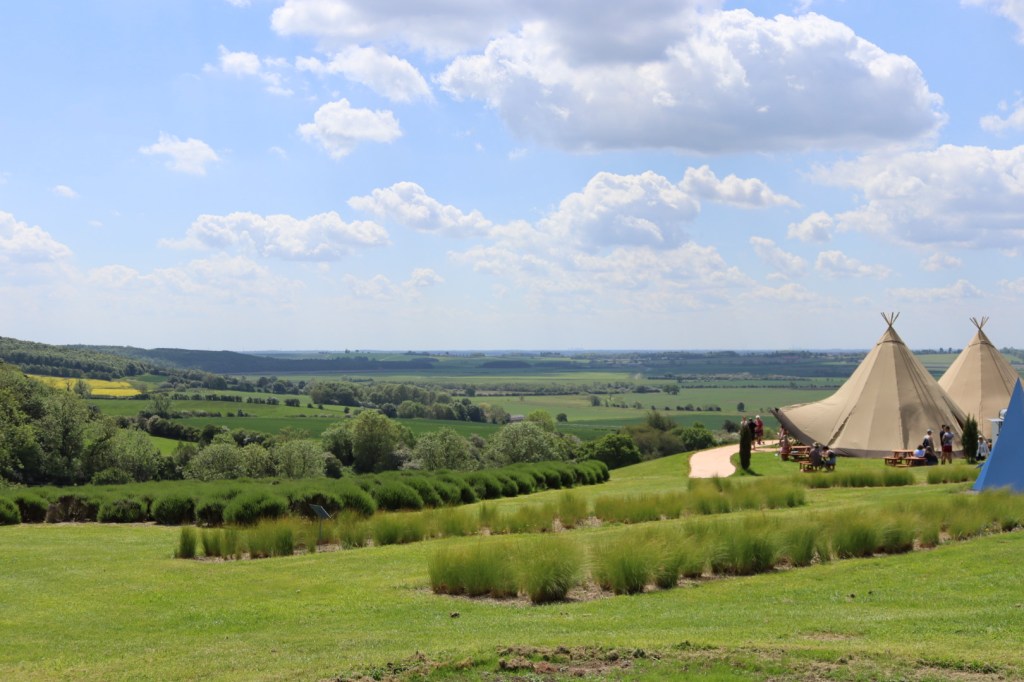
Yorkshire Lavender

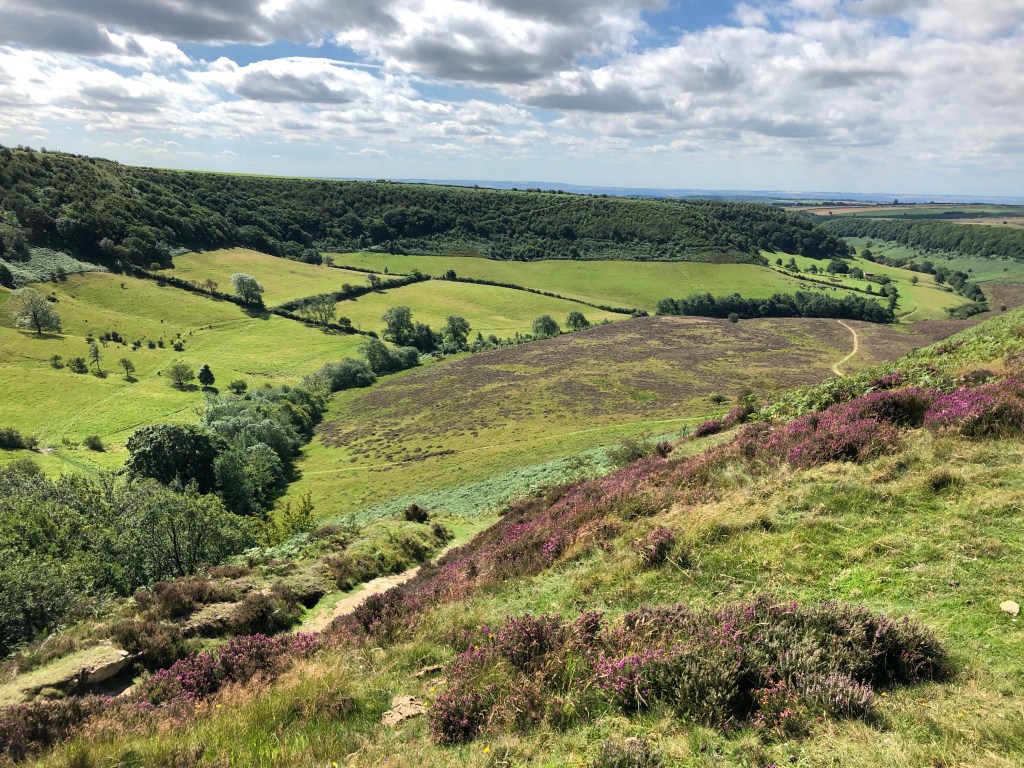
Or for a lovely walk, head to the Hole of Horcum which is about a 30-minute drive away. It is a huge “natural amphitheatre” and absolutely stunning on a sunny day (or in the mist, very atmospheric). Legend has it, it was formed during an argument between Wade the Giant and his wife when he scooped up a handful of earth to throw at her. How very rude! Other people say it has just been caused over time by the rain…
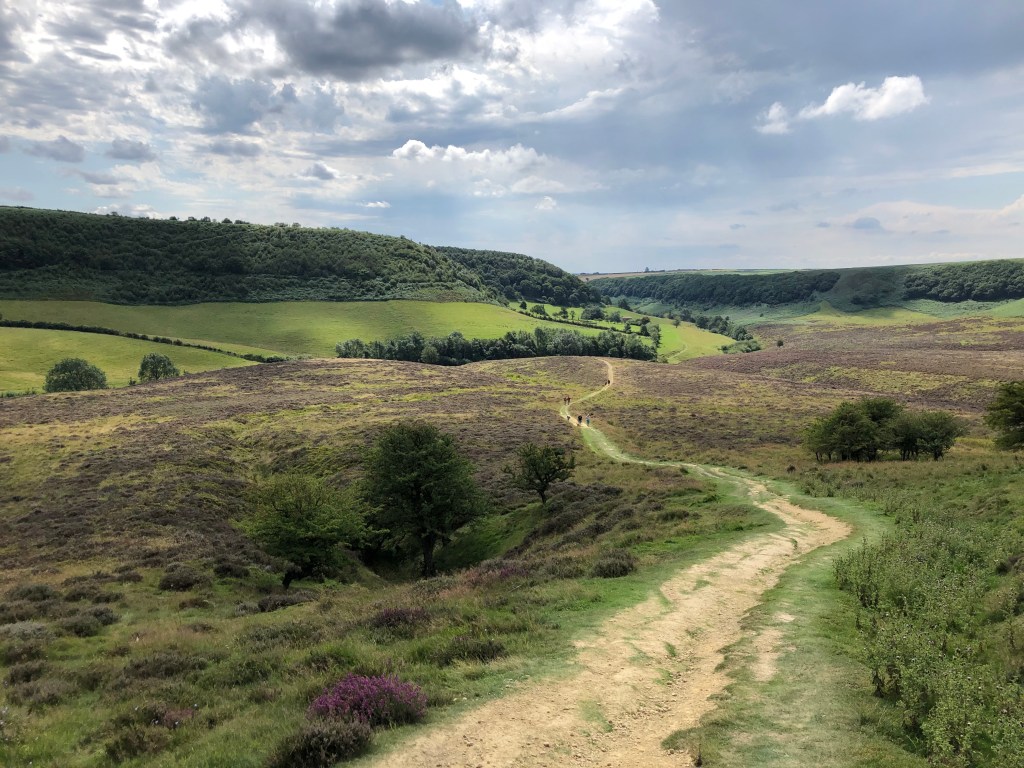
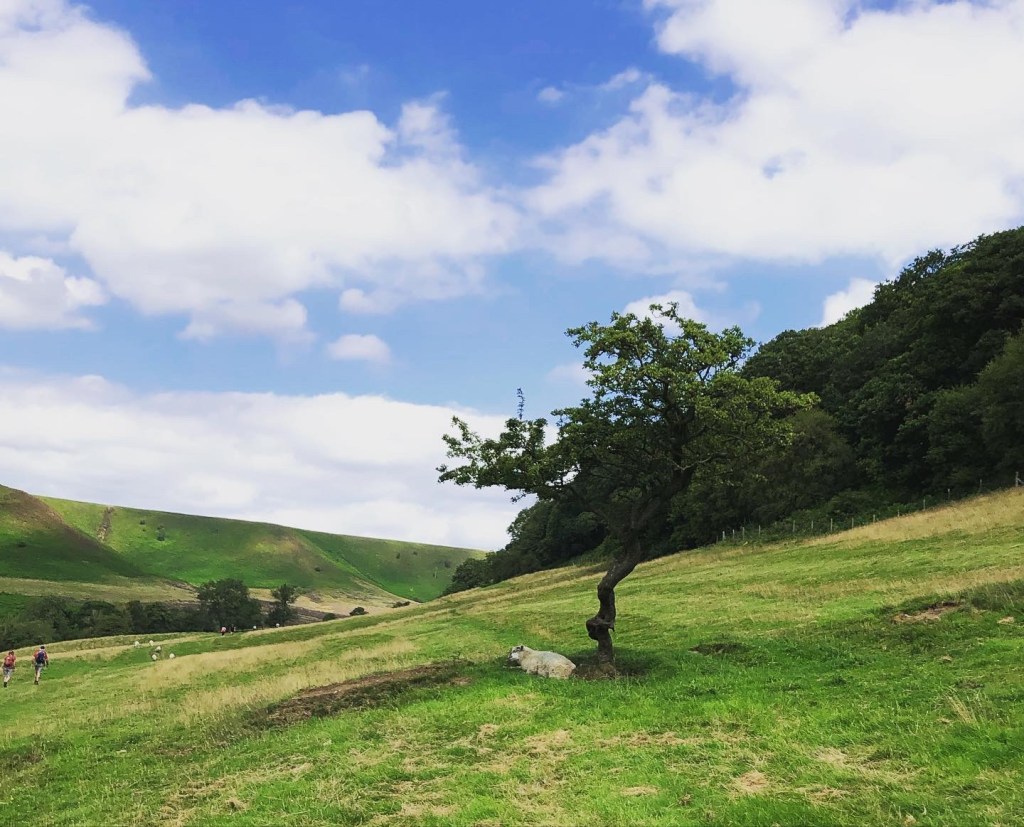
The Hole of Horcum

And if you don’t fancy driving on your next adventure, Helmsley is one of the starting points for the Cleveland Way: a 109-mile walk which will take you from Helmsley Castle to the Brigg at Filey, skirting the North Yorkshire Moors.

You will be spoilt for choice on your trip so grab some comfy shoes and get on out there!
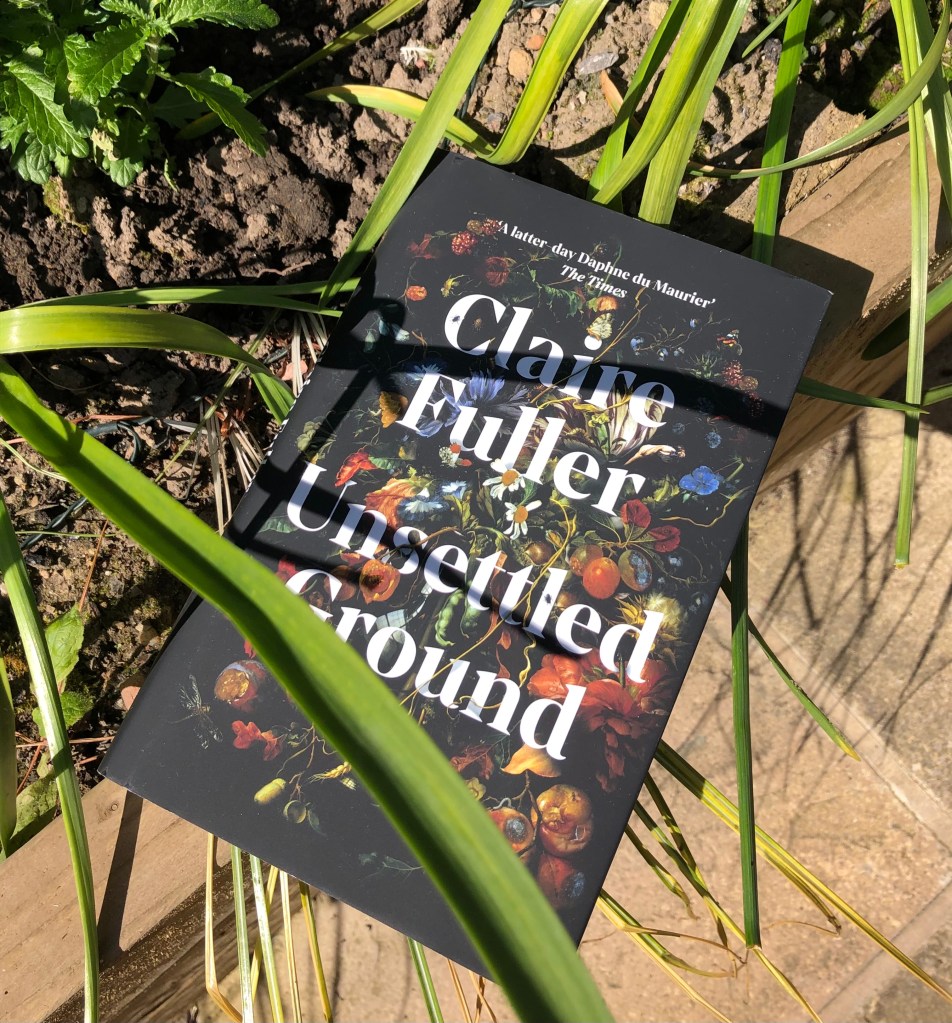
Book Review: Unsettled Ground, by Claire Fuller

The morning sky lightens, and snow falls on the cottage. It falls on the thatch, concealing the moss and the mouse damage, smoothing out the undulations, filling in the hollows and slips, melting where it touches the bricks of the chimney….

The worries of seventy years – the money, the infidelity, the small deceits – are cut away, and when she looks at her hand she can no longer tell where she ends and dog begins. They are one substance, enormous and free, as is the sofa, the stone floor, the walls, the cottage that, the snow, the sky. Everything connected.

Unsettled Ground

The book starts with a death: Dot, an elderly woman who lives in a farm cottage with her 51 year-old twins, Jeanie and Julius. Dot has brought them up away from the rest of the world; after their father died and they find out Jeanie has a heart condition, they have been kept safe within the walls of the cottage. Jeanie and Dot grow their food, sometimes selling vegetables to make some money, while Julius tries to find farm work where he can. They live an idyllic life together, with no television or mobile phones, and limited interaction with others. When Dot dies, Jeanie and Julius’ lives are turned upside down. The struggle to make ends meet becomes much harder as they soon learn that the cottage, which they believed they lived in rent-free, is owing rent to the farmer who owns it and soon they will be evicted. The more they try to find out, the more secrets they find they have to uncover. Unsettled Ground is a heart-breaking exploration of grief, family bonds, betrayal and hope.

Jeanie is past the farmhouse, cycling faster than she knows she should, the trailer rattling along behind. Anything could happen: she could fly over the handlebars or the animal in her heart might burst out, but right now she doesn’t give a monkey’s.

Unsettled Ground

When Jeanie and Julius are in the local village people look at them differently and treat them as though they are odd. Similar to one of Claire Fuller’s other novels, Our Endless Numbered Days, she explores what it is like to be different and to be on the outside of society looking in. In Our Endless Numbered Days, a young girl is taken from her family home by her father, an obsessive ‘survivalist,’ to live in a hut in the woods, telling her that the rest of the world has been destroyed and they are the only two left. In both books we run away from modern life which is shown to be so very entangling, cruel and fake. There is a moment in Unsettled Ground where Jeanie watches another character make her dinner using a jar of pasta sauce and when she suggests using fresh vegetables she is told no. Wouldn’t it be nice to leave it all behind and live a simpler existence where you grow your own food and your evening entertainment comes from your own family making music? But then we see how devastatingly hard it is. In Unsettled Ground everything is a struggle: there’s never enough money to buy the things they need, people take advantage of them, and there’s not enough work. What will they do when they lose their home and don’t have any savings or even a bank account?

When Julius gets home, again there is no tea cooking and no hot water on to boil for his wash. Jeanie is sitting in the same chair as yesterday, head down over her guitar, playing. Only (the dog) looks up to great him. This time, rather than the surge of sympathy and sorrow he felt yesterday, he has a burning irritation that she hasn’t done anything with her day while he’s been working, earning money. Why is it she hasn’t ever had a job?

Unsettled Ground

It’s a beautifully written book that slowly depicts the twins’ lives and does, at points, definitely leave you feeling unsettled. There’s also lots to think about how society treats people who don’t fit ‘the norm’ and the cruelty that can be unleashed. Claire Fuller so devastatingly describes the poverty and the harshness of the twins’ world, but hope can be found in the determination that Jeanie and Julius have to try and move forwards to stay together and look after each other.

I’m now off to track down Claire’s other two novels Blood Orange and Swimming Lessons because something tells me they are also going to be very good.  

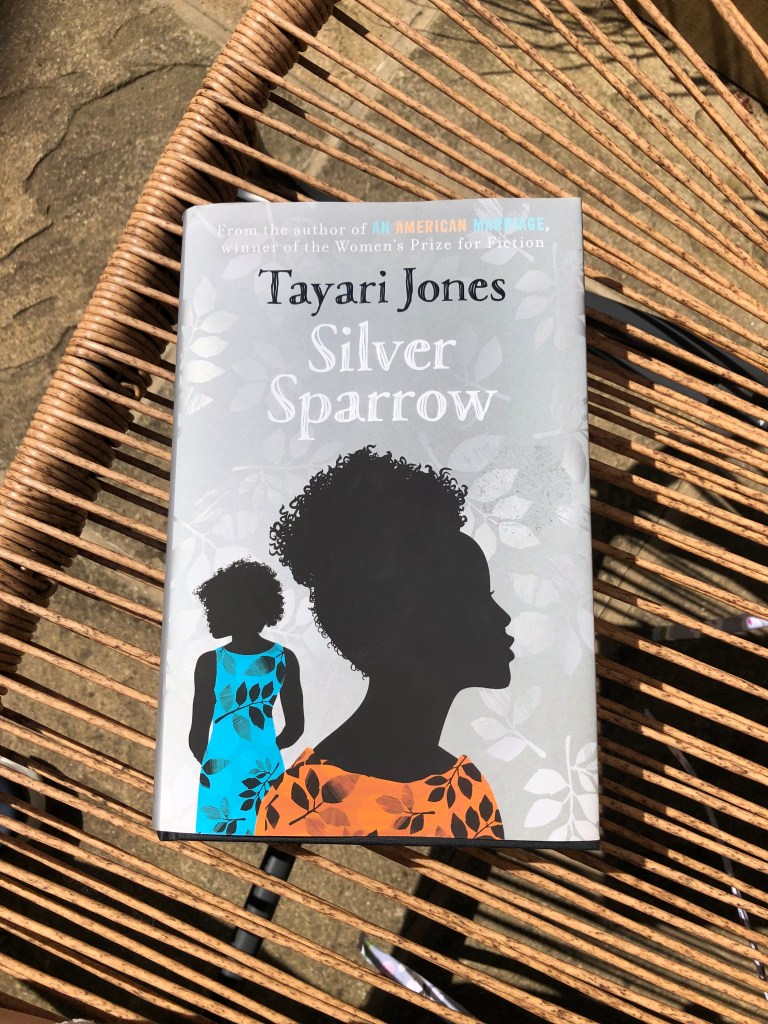
Book Review: Silver Sparrow, by Tayari Jones

James sighed and bounced me on his lap a little bit. “What happens in my life, in my world, doesn’t have anything to do with you. You can’t tell your teacher that your daddy has another wife. You can’t tell your teacher that my name is James Witherspoon. Atlanta ain’t nothing but a country town, and everyone knows everybody.”

“Your other wife and your other girl is a secret?” I asked him.

He put me down from his lap, so we could look each other in the face. “No. You’ve got it the wrong way around. Dana, you are the one that’s a secret.”

Silver Sparrow

Silver Sparrow follows the childhoods and teenage years of half-sisters Dana and Chaurisse. Their father, James, is married to both their mothers, choosing to live publicly with one of his families and keeping the other a secret. But, the truth will always find a way to reach the surface. The sisters meet and form a friendship which results in the unravelling of all that has been hidden.

The book is split into the two narratives of Dana and Chaurisse. In the first part, Dana is looking back on her childhood and her mother Gwen’s relationship with her father. She describes how they met at the store Gwen worked at as a gift-wrapper when James comes in to buy a carving knife for his wife, Laverne, as an anniversary gift. There is a sense in the book of Dana taking her time to tell their story, there’s no rushing over small details which build up the history of her family. Like the long drags of the cigarettes Gwen smokes as she tells the story to Dana, a lot of thought goes into how it should be presented.

Dana grows up knowing about her father’s other family and understands that her needs will always come second to that of Chaurisse: if Chaurisse wants to get a part-time summer job at the same place she does, Dana will have to find a job elsewhere. Gwen has worked hard trying to build a better life for her daughter, and trying to ensure that Dana gets the same opportunities as Chaurisse. There are descriptions of Gwen putting cucumber in their water jugs, for example, when she knows James is coming because “a doctor’s wife had told her they serve it at day spas” to make their lives that little bit fancier compared to the other family he goes home to.

They are fascinated by James’ other family and they see Chaurisse and her mother as getting whatever they wish for. When Dana finally meets Chaurisse she is full of questions about their father and the mundanity of their lives, such as where he sits at the dinner table and how often Laverne cooks.

It matters what you call things. Surveil was my mother’s word. If he knew, James would probably say spy, but that is too sinister. We didn’t do damage to anyone but ourselves as we trailed Chaurisse and Laverne while they wound their way through their easy lives.

Silver Sparrow

What we learn when the narrative changes to Chaurisse’s voice for the second part of the book, is that their lives are just as tough. For Chaurisse, her parents were married when Laverne was only fourteen years old:

This mess came as a consequence of her cousin Diane falling in love with Uncle Raleigh… So Mama went along with her cousin after school, and when her cousin disappeared with Uncle Raleigh, Mama was by herself with Daddy. This whole situation was just a matter of who was sitting next to who, when. Next thing Mama knew, there was a baby growing inside here and the was nothing that anyone could do about it.

Silver Sparrow

Laverne had to leave home and move in with two boys who were only a little older (James and Raleigh, a brother-like friend and business partner) and learn how to be a wife. In her narrative, Chaurisse describes Laverne having to stop her schooling and her favourite teacher commenting what a waste it was that she was pregnant. Laverne has also worked hard doing people’s hair, building up her business to make something of herself.

The book explores the tender teenage years when childhood innocence is lost and the girls start to realise that things might not all be as they seem. Dana tries to push the boundaries with her parents and Chaurisse worries about not fitting in with the other girls at her school. Both sisters are united in their loneliness and sense of separation from those around them.

I recommend Silver Sparrow, especially if you enjoyed An American Marriage which I read a couple of years ago and loved. As with An American Marriage, I felt drawn in from the first page. Tayari Jones has a wonderful way of picking up on small details such the cracks in a leather couch, or the smell of freshly washed laundry, that makes the story so immersive. For such an uncomfortable subject matter, the story is a quietly powerful one as it leads towards the moment where the truth comes out.

Book Review: Writers & Lovers, by Lily King

All problems with writing and performing come from fear. Fear of exposure, fear of weakness, fear of lack of talent, fear of looking like a fool for trying, for even thinking you could write in the first place. It’s all fear. If we didn’t have fear, imagine the creativity in the world. Fear holds us back every step of the way.

Writers & Lovers

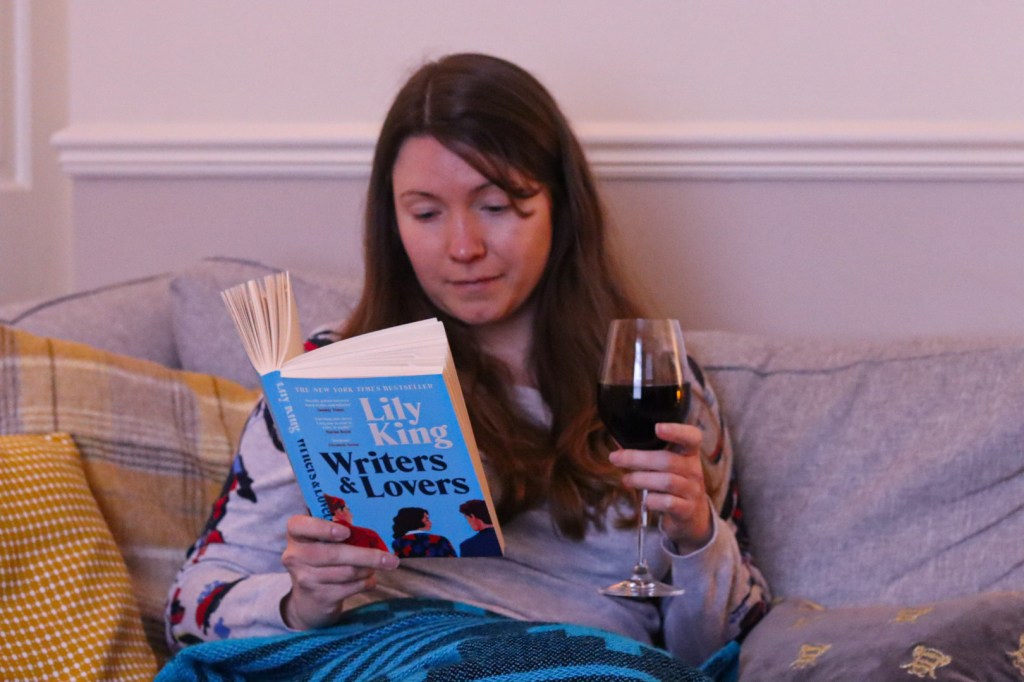
Books about the process of writing are so interesting to me (as someone who wants to write a novel but has a million and one reasons why I’d never be able to do it), and Writers & Lovers so perfectly captures the struggle of writing: how hard it can be one day to drag up the words from your soul and how they can flow through you the next. Only for you to then be crippled with self-doubt that every word you have written is rubbish, of course.

The hardest thing about writing is getting in every day, breaking through the membrane. The second-hardest thing is getting out. Sometimes I sink down too deep and come up too fast. Afterward I feel wide open and skinless. The whole world feels moist and pliable. When I get up from the desk I straighten the edges of everything. The rug needs to be perfectly aligned with the floorboards. My toothbrush needs to be perpendicular to the edge of the shelf. Clothing cannot be left inside out. My mother’s sapphire ring needs to be centred on my finger.

Writers & Lovers

The story is about Casey who is, by day (and evening) a waitress, but all she wants in life is to be a writer. She struggles putting pen to paper because she feels like a failure, an imposter, a fraud. For Casey, summoning up her writing it’s a kind of painful ecstasy.

The blurbs on the book cover, from the Sunday Times for example, describe the book as “extremely funny” but I disagree – it’s painful to read and made my nervous system jangle. Casey’s descriptions of anxiety and panic, feeling like bees under her skin, and her observations of just how hard life can be, are so brutally honest:

All I want is to write fiction. I am a drain on the system, dragging around my debts and dreams…

I can’t go inside until I slow down. My heart and mind feel like they are in a race to the death. I watch my breath. I squeeze my muscles one by one…

I go inside and lie on my futon and wait to explode.

Writers & Lovers

In fact, I would tear up the blurb on the book (apart from the review from the Guardian which describes it as “a kind of gorgeous agony” which I wholeheartedly agree with). But the others, which make it sound like a cheeky little comedy about a woman falling in and out of love with two men and who also happens to be writing a book, don’t do it justice.

Writers & Lovers is about what it takes to write a book, the fear that drives an author and lives in every sentence. It’s about a young woman trying to find her place in the world, about overcoming the shit that life has tried to drag her down with. It’s about creativity being stifled by the need to pay the bills. It’s about talent and dedication, and passion for the art of story-telling. Maybe I took the book too seriously. As someone who often feels like a fraud admitting they want to be a writer, I didn’t see it as hilarious but as an accurate reflection of how hard it is to be creative in a world where so much pressure is put on how much you get paid.

That might all be a bit over zealous. There are a few comic moments. At one point, for example, Casey leaves her manuscript at a friend’s to read and she worries it might be picked up by a neighbour who will read it and then publish it to great success under their name. She imagines she having to go to court with her scraps of notes to win her book back. I’ve definitely thought this when emailing bits of writing to friends – what if it gets lost on the internet and someone else passes it off as their own.

And there happens to be male love interests in the book too: Oscar and Silas. One is a famous author and the other is trying to become one. I loved all the comments in the book about writers and how they present themselves. There is a scene where Casey it is at a party at her friend’s house and a recently published author called Eva is there. Casey comments how Eva seems to have changed since her book was published:

I met Eva six years ago, when she was working on the collection. They aren’t stories, she told me, they’re hard little polyps I’m training to remove from my brain. She was sort of ablaze with a lot of nervous energy then. All the stuffing seems to have gone out of her since. She looks embarrassed, sitting on that stool, to be who she is now.

Writers & Lovers

Casey has also recently lost her mother who went on a holiday to Chile and died while she was there. Memories of her mother intermingle in the story as little things pop up and remind Casey of her; “My mother used to bring me here when I was little,” she comments at one point, “She’d let me borrow a hard leather purse from her closet, and I’d wear it the way she wore hers.’ I tuck a pretend purse under my arm.” Or when she is playing the card game crazy eights with Oscar’s children, who have also lost their mum, she quietly remembers “my mother taught it to me when I had chicken pox in kindergarten. I made her play for days.” These surprise moments of grief which are constant reminders of her loss pepper throughout the book.

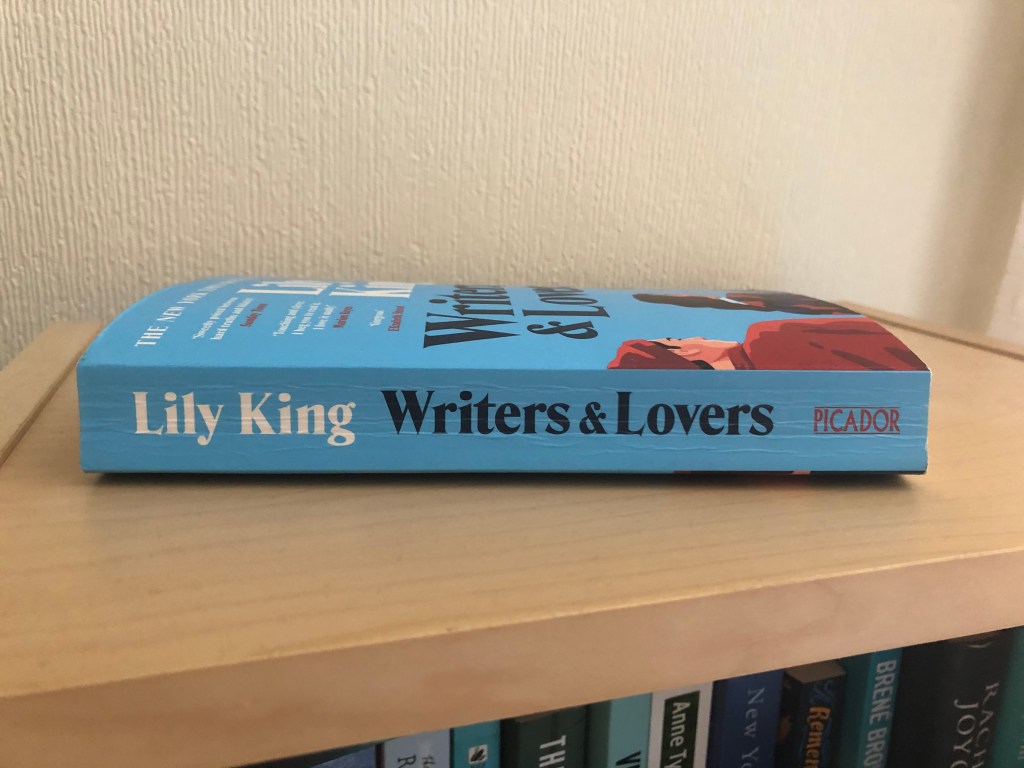
I was reading my mum’s copy of the book. It was a story that has she said she’d loved. When it came to an end, she told me as she passed it on, she had been left wanting to know more as she had grown so fond of the characters and she genuinely cared about them. As I was reading the book, I was aware of the spine that had been bent and broken, the way my mum does when she is reading, the way I’ve noticed I’ve also started to do too.

There were moments in the novel when I really did wonder how Casey was going to be ok: the horrible job as a waitress with the rotten men, the shed she lives in that smells of mould and soil, the struggles of writing. But there was so much resilience in Casey (as I think there is in a lot of artists I admire), and that internal deep-driven need to create that kept me turning the pages. I highly recommend this book to any writer or anyone interested in the process of writing, as well as anyone who just enjoys a well told story of modern life and the struggle to be creative.

Laos and Parts Unknown

As you move through this life and this world you change things slightly, you leave marks behind, however small.

And in return, life – and travel – leaves marks on you. Travel is about the gorgeous feeling of teetering in the unknown.

Anthony Bourdain

Like a lot of people, I imagine in this pandemic, I have taken solace in the words of Anthony Bourdain. I am slowly making my way through Parts Unknown on Netflix. And I mean, really taking my time. Sometimes I immediately go back to the start of an episode to re-watch it so that I can fully soak in all the goodness. His knowledge and ability to talk so eloquently about his experiences, the places he visits – I just want to go to each and every one of them. Maybe not eat all the things he does, I’m not sure how I feel about anything with brain or tongue in it.

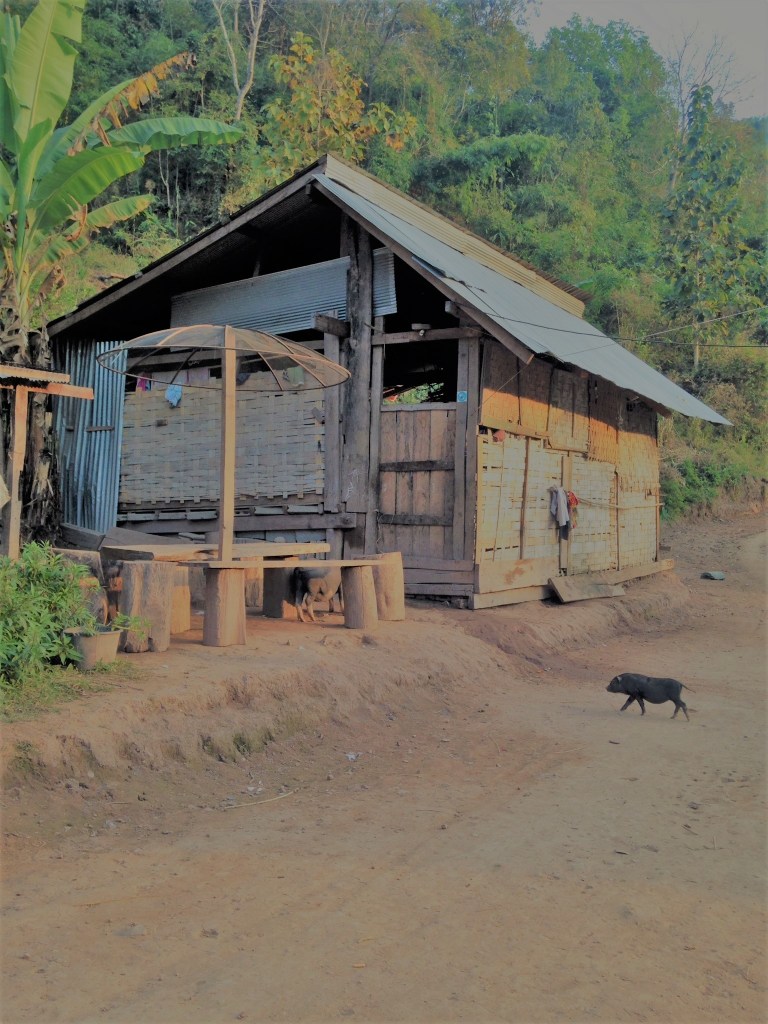
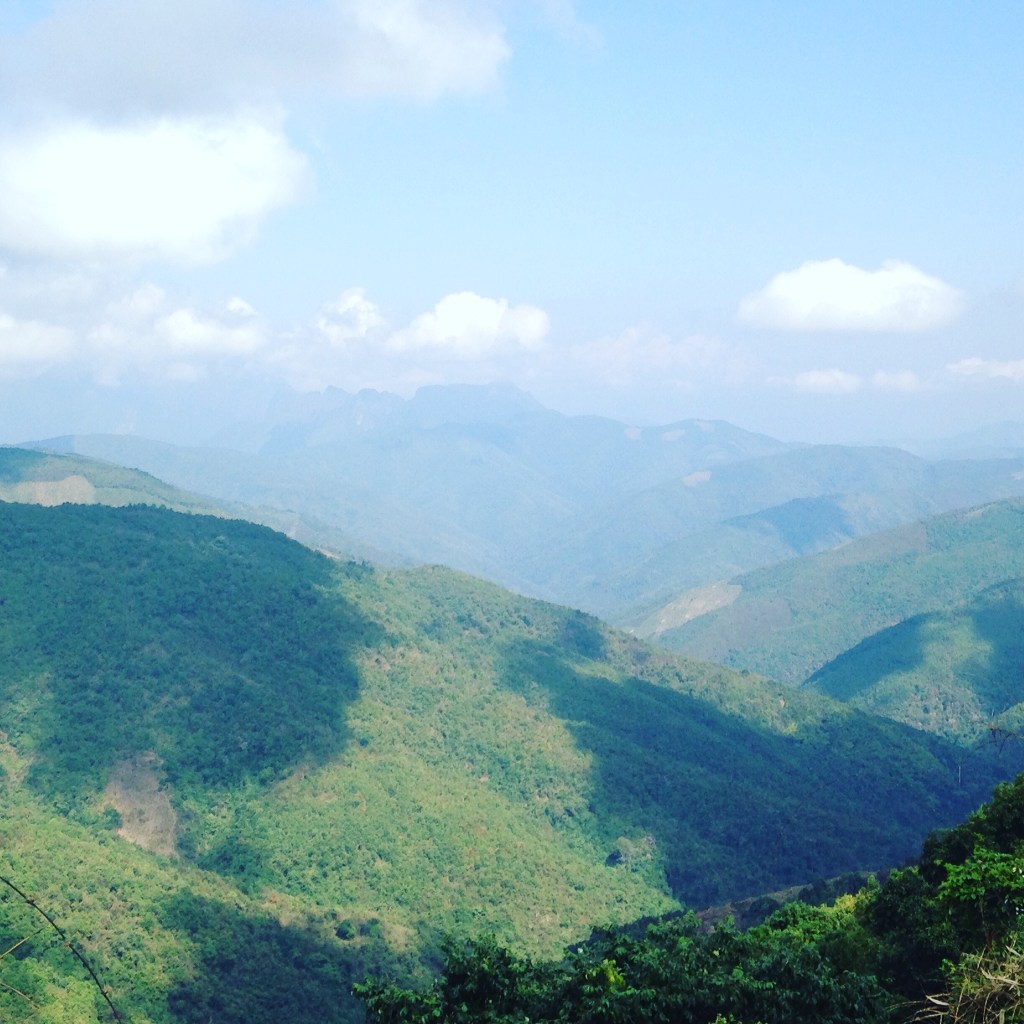
I recently watched the Season 9 episode filmed Laos in 2017. I went to Laos in 2016 and the episode brought back so many memories of the food and the absolutely beautiful landscape but it also taught me so much that, I’m ashamed to say, completely washed over me while I was there.

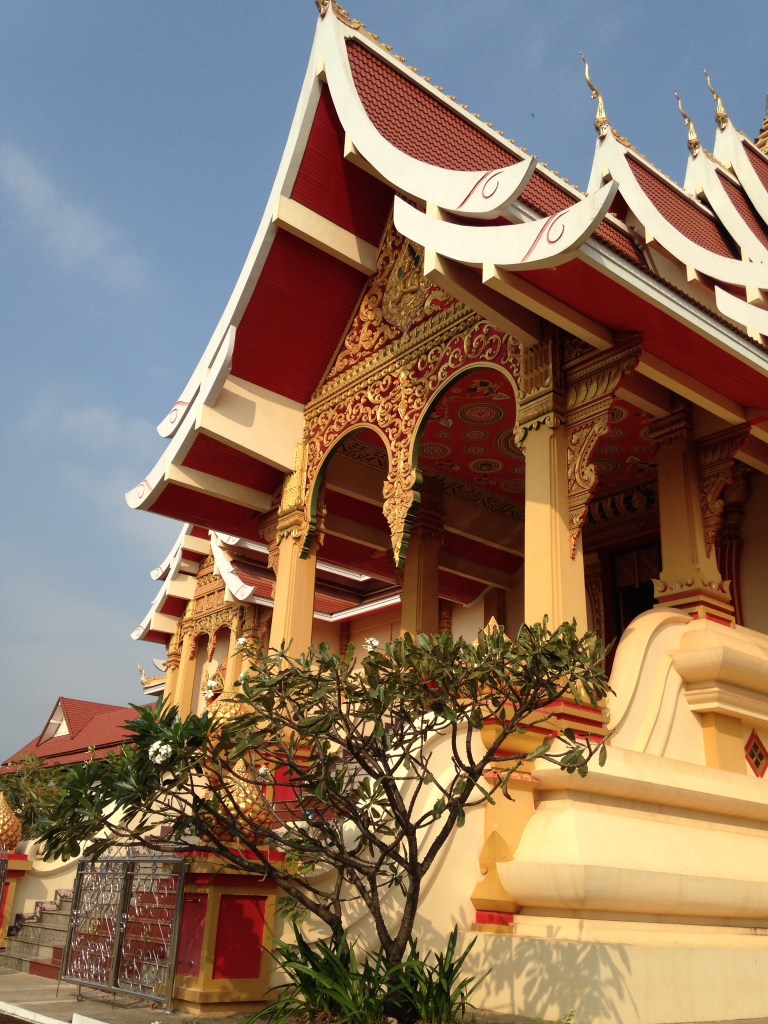
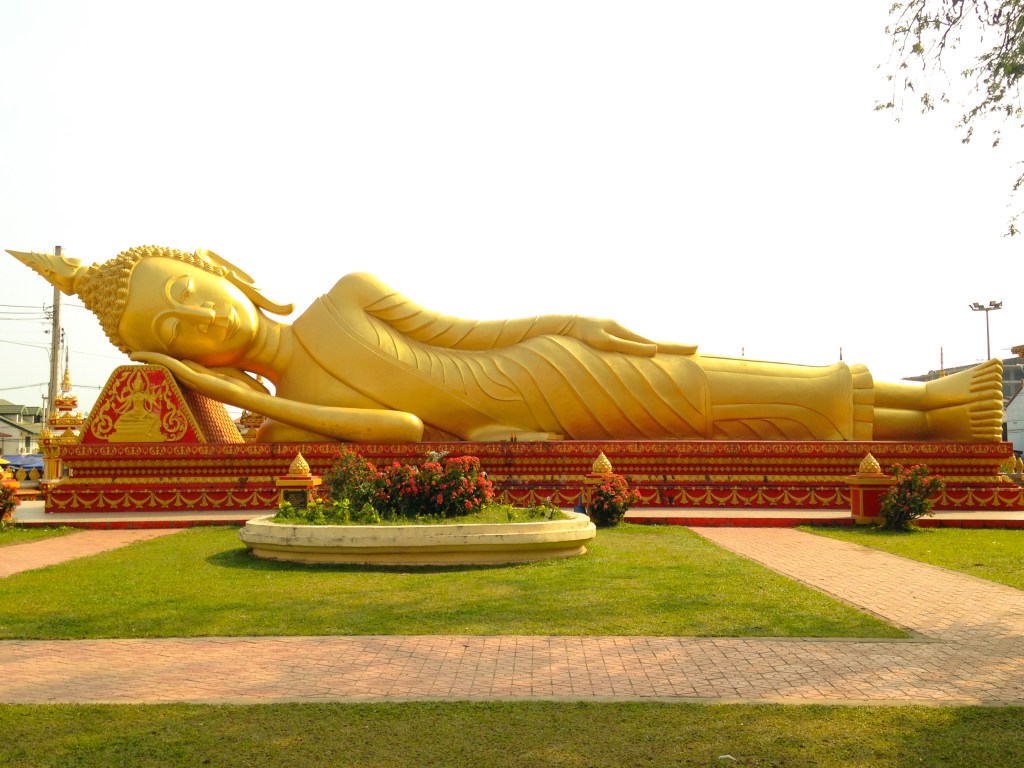
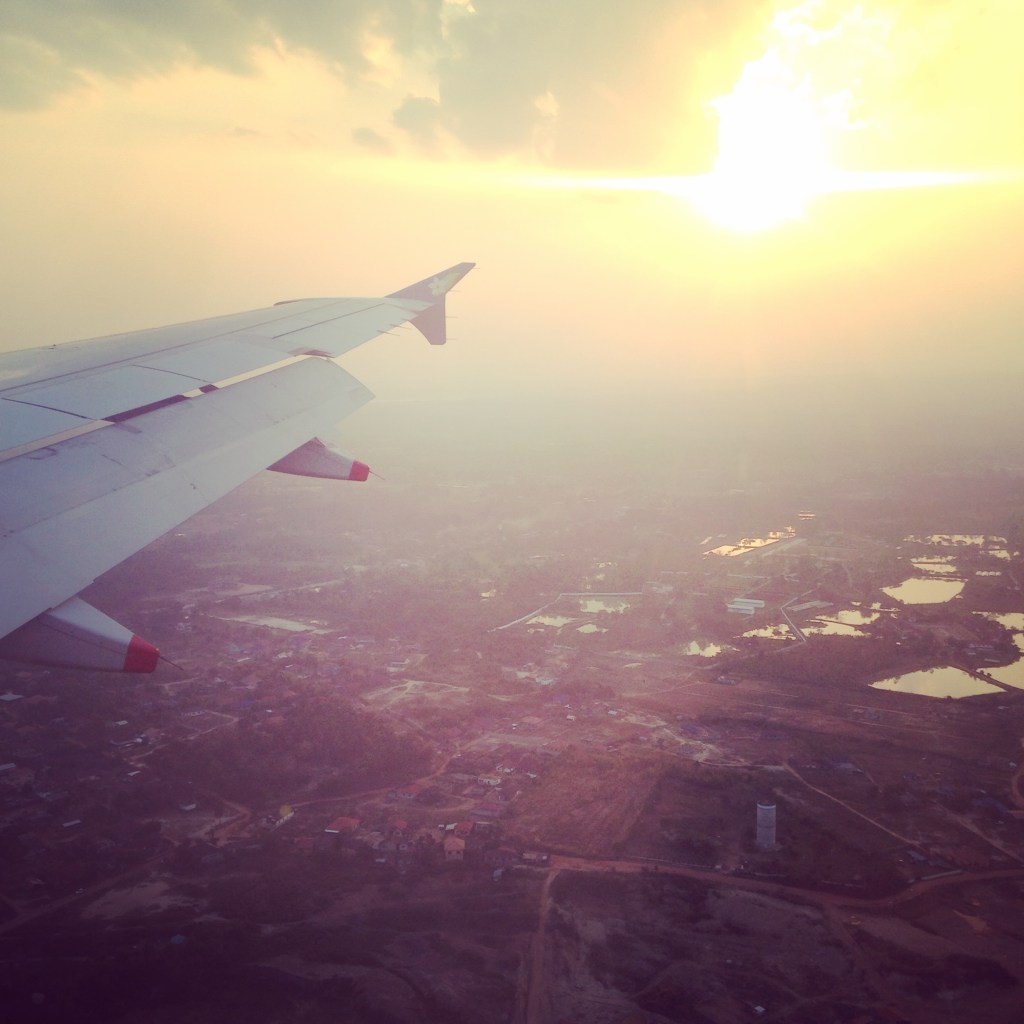
I remember Laos as an adventure holiday. I arrived after being in Vietnam which had been unseasonably cold and wet, I didn’t have any warm weather things packed, and ended up with a fearsome cold. So the minute I stepped off the plane in Vientiane, the first thing to hit me was the humidity. I loved Vientiane – it was so bright, and steeped in colours of reds and golds.

Pha That Luang

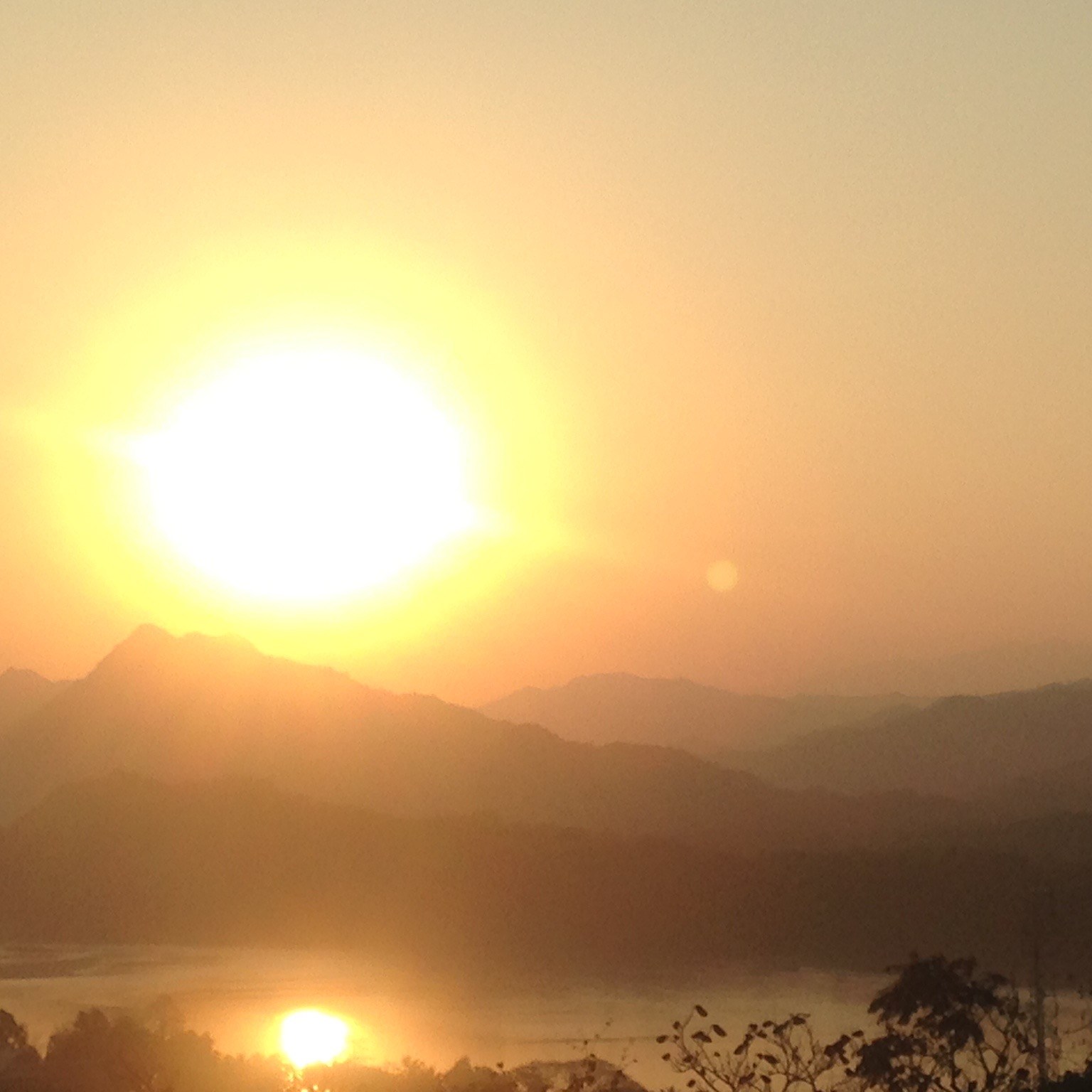
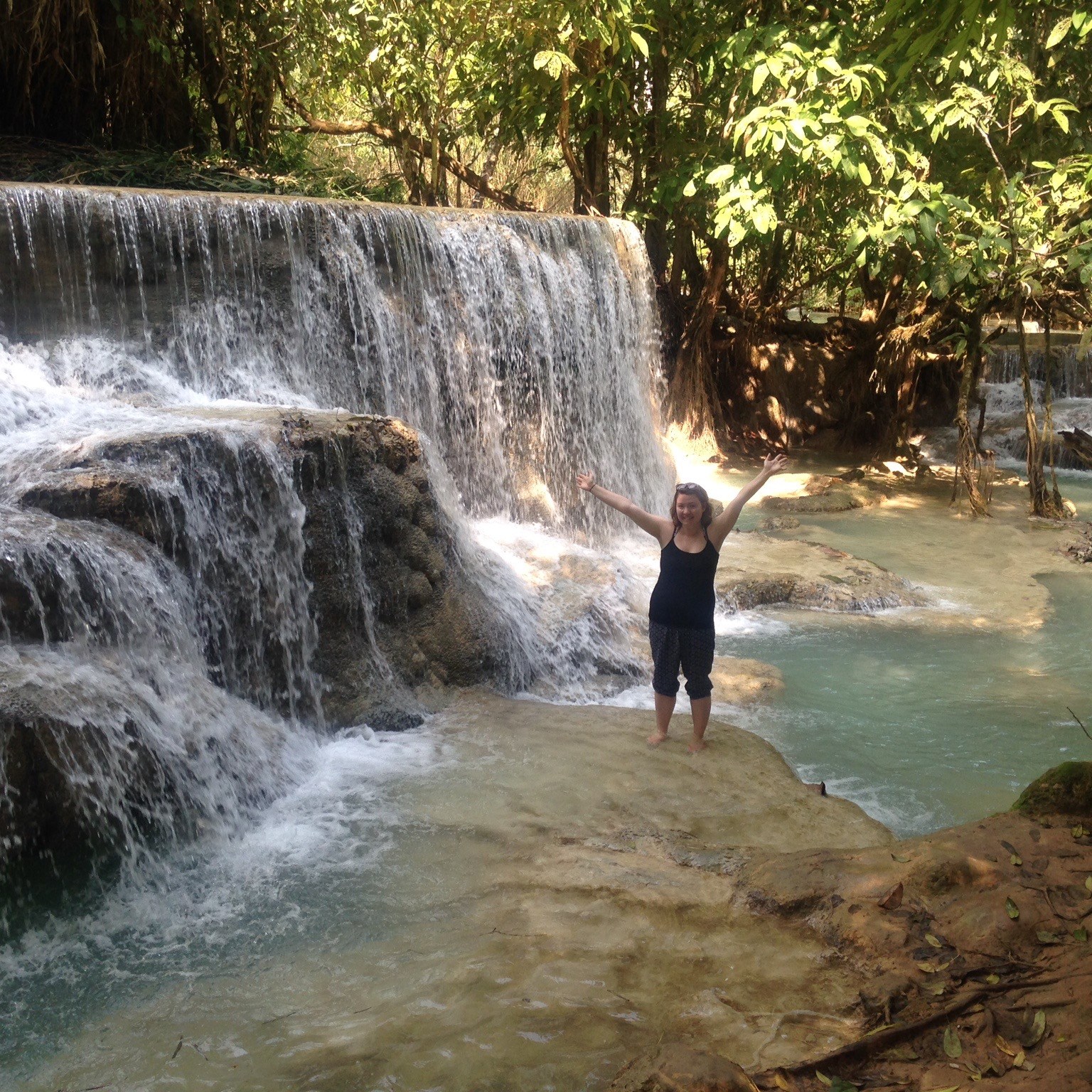
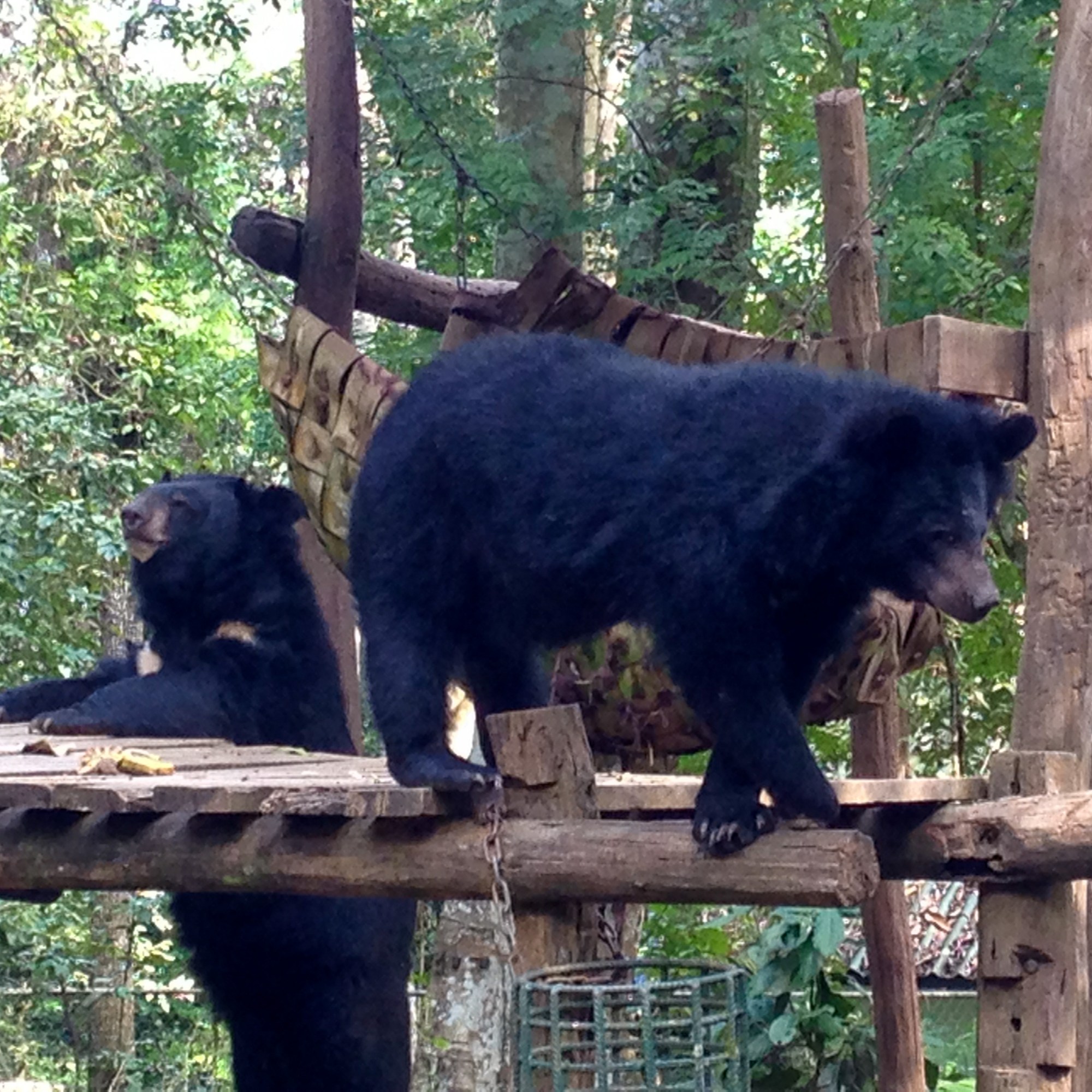
I then went on to Vang Vieng with a group where we went tubing and caving and it was good fun! I remember jumping off cliffs into cold water and bobbing along in a big rubber ring. It felt like endless days of sunny adventures and fun, followed by evenings of card games over beers. We went hiking up hills to watch sunsets and try and find the sources of waterfalls. In Luang Prabang, we visited the Kuang Si falls, which are the most gorgeous shade of turquoise and blue, and saw the bears.

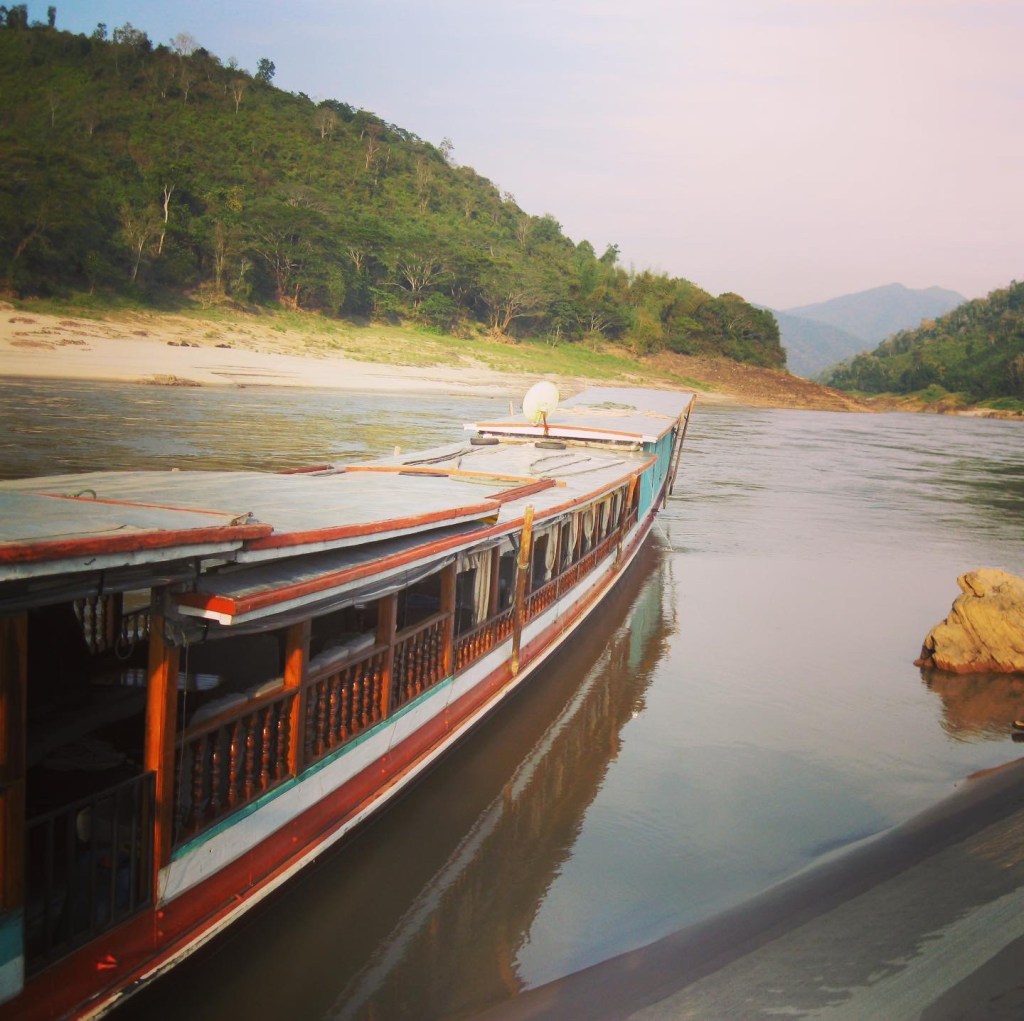
The thing I remember the most about Laos was sailing for two days on the Mekong River aboard a houseboat. We were constantly surrounded by the lushest vegetation on the river banks as our narrow boat pootled along down the river. I had also managed to pick up a paperback of an old John Grisham from one of the hotels (my first new book in a while) and I was so happy sat in the sun reading and watching the world go by.

Watching Parts Unknown, I learnt about Laos’ history. Looking at it on a map, Laos is a small country surrounded by China and Myanmar to the north, Cambodia in the south, Thailand to the west with the Mekong river, and Vietnam on the east. When the Cold War was raging, Laos was also in the midst of a civil war between the Pathet Lao communist group (who were largely dependent on Vietnamese aid), and the Royal Lao government.

The US supported the Royal Lao Government as part of their war against Communism and spent nine years bombing Laos in the ‘Secret War’ trying to disrupt communist supply routes – the Ho Chi Minh trail being key for the Vietcong and North Vietnamese ran along Laos’ eastern border. Eisenhower commented if Laos was lost to communism “the rest of Southeast Asia would follow.”

The Secret War resulted in Laos becoming the most heavily bombed country (per head of population) in the history of warfare. As Bourdain comments in the episode, more high explosives were dropped on Laos than on Germany and Japan combined during all of World War II. After ten years of bombing, the Pathet Lao came to power establishing the Lao People’s Democratic Republic (Lao PDR).

The Secret War left behind a devastating impact that is still affecting the country today. The cluster bombs, or bombies, that were used had an estimated 30% failure rate in perfect conditions. Around 78 million of the bombies dropped on Laos failed to explode and many are still in the ground today. As a result, Lao PDR has the highest rate of post-conflict cluster munitions casualties than anywhere else in the world. Children pick them up and play with them. A very moving moment in the episode shows UXO (unexploded ordnance) workers with metal detectors slowly moving through the fields trying to pick up the beeps that signal an unexploded bomb. At one point, the beeps go off and a woman slowly kneels down and begins to scrape away at the soil with a trowel. Bourdain and the crew then get the chance to safely detonate it.

I remember Laos being fun, friendly and vibrant. I remember it being beautiful, even their public restrooms have some of the most spectacular views in the world (the picture below was taken in one of the stalls).

Loo with a view

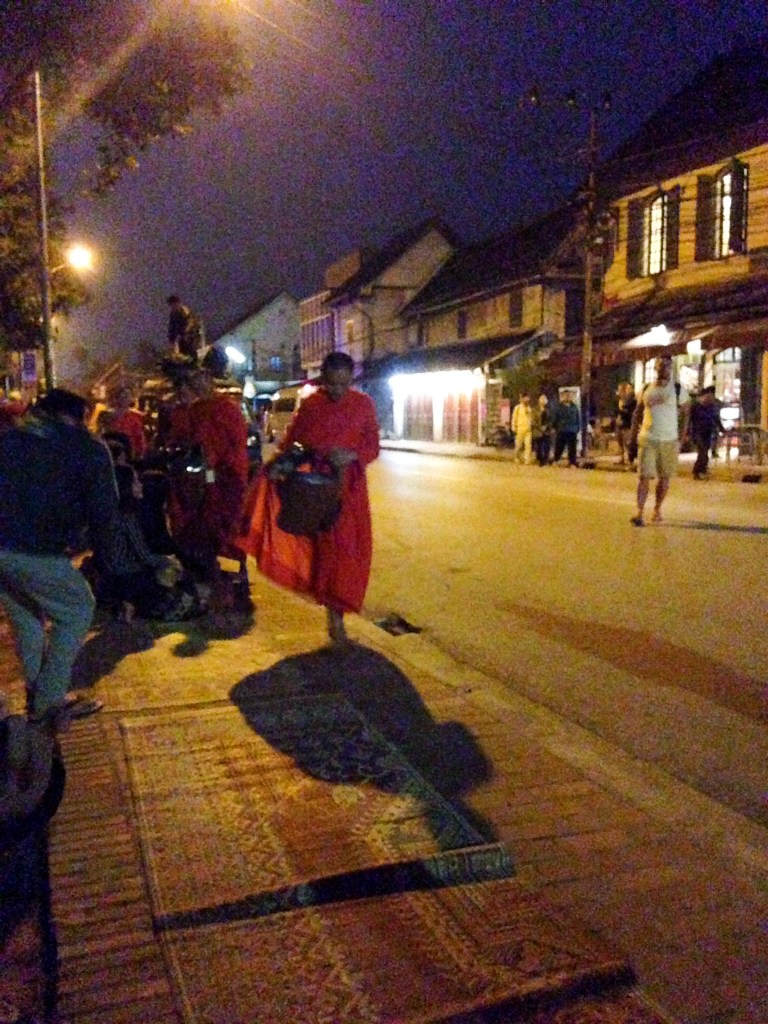
Like in Parts Unknown, I got up before dawn to give alms to the Buddhist monks. This is where the monks walk through the street before the sun comes up with their alms bowls and receive food donations, such as sticky rice, as they walk. It is just a truly unforgettable and beautiful place, like no other.

To write this post, I used the following resources:

https://explorepartsunknown.com/destination/laos/

https://www.history.com/news/laos-most-bombed-country-vietnam-war

https://voxeu.org/article/devastating-legacy-secret-war-laos

Edinburgh: Fringe and Blossom

It was August 2013. The now disgraced ‘Blurred Lines’ had been number one in the charts for what felt like a decade and I was in the back of the car, stuffed in by my belongings, on the way to Edinburgh to start my Masters in American History.

As I watched my parents drive away, I remember thinking ‘ok, what now?’ I was in a brand new city feeling nervous, excited, and like I had a stomach full of demented butterflies. That buzzing feeling we enjoy as travellers when we find ourselves somewhere new!

I decided to walk through the city to get to know my new surroundings. I was renting a room in a tenement flat in Marchmont which is about a twenty-minute walk from the heart of Edinburgh. And what a gorgeous twenty-minute walk. Just for anyone wondering, a tenement building is a huge, beautiful building made of bright stone; they tend to come in a row and look simply stunning in all weather. They can be three or four (or sometimes even more) storeys high, each floor its own flat, and they often have great big windows that let in lots of light. I remember ours had a big bay window in the lounge that you could see the castle from. Looking back, I was so lucky to have been able to find such a nice place to rent a room in.

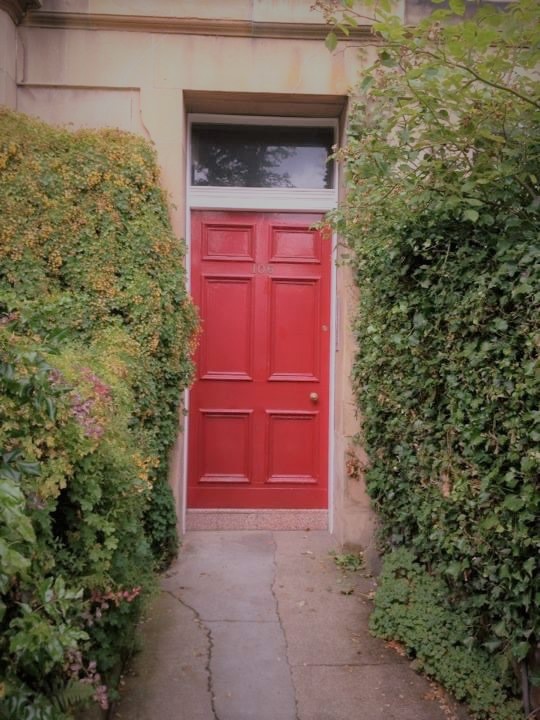
The bright red door that led to my flat

I decided to walk through the city to get to know my new surroundings. I walked up and down the main streets, through snickets, round hidden corners, and up so many sets of stairs, trying to learn how everywhere linked up. I just followed my feet and they led me to Regent Road and the base of Calton Hill. I climbed up the steps with no idea what to expect when I reached the top.

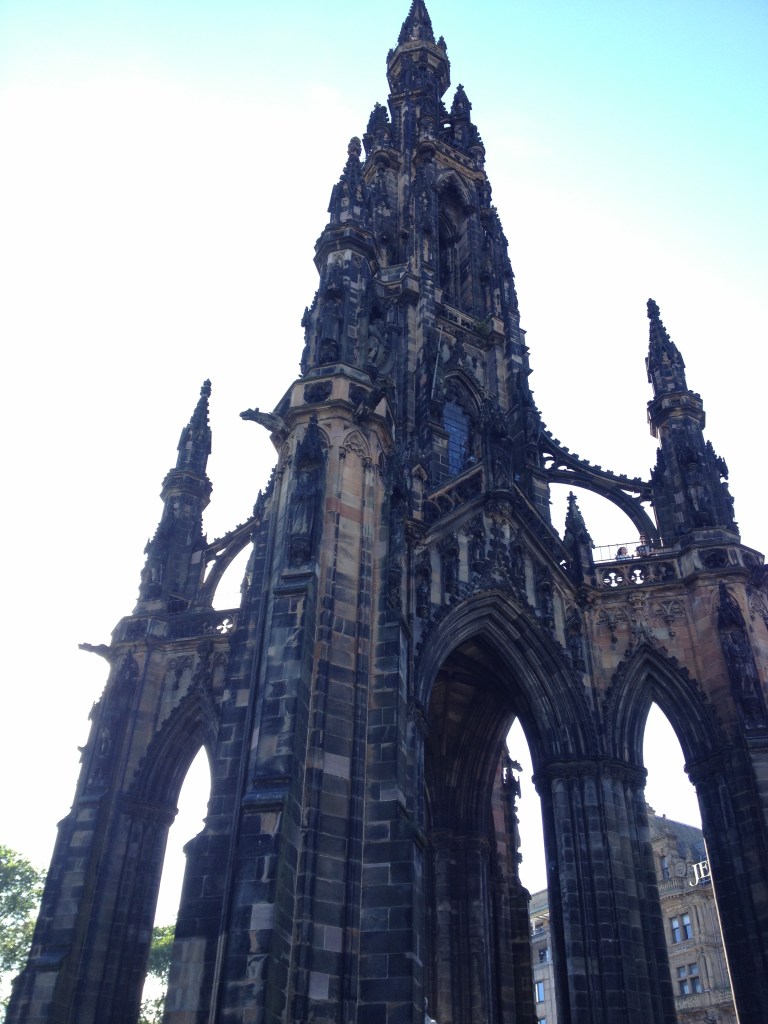
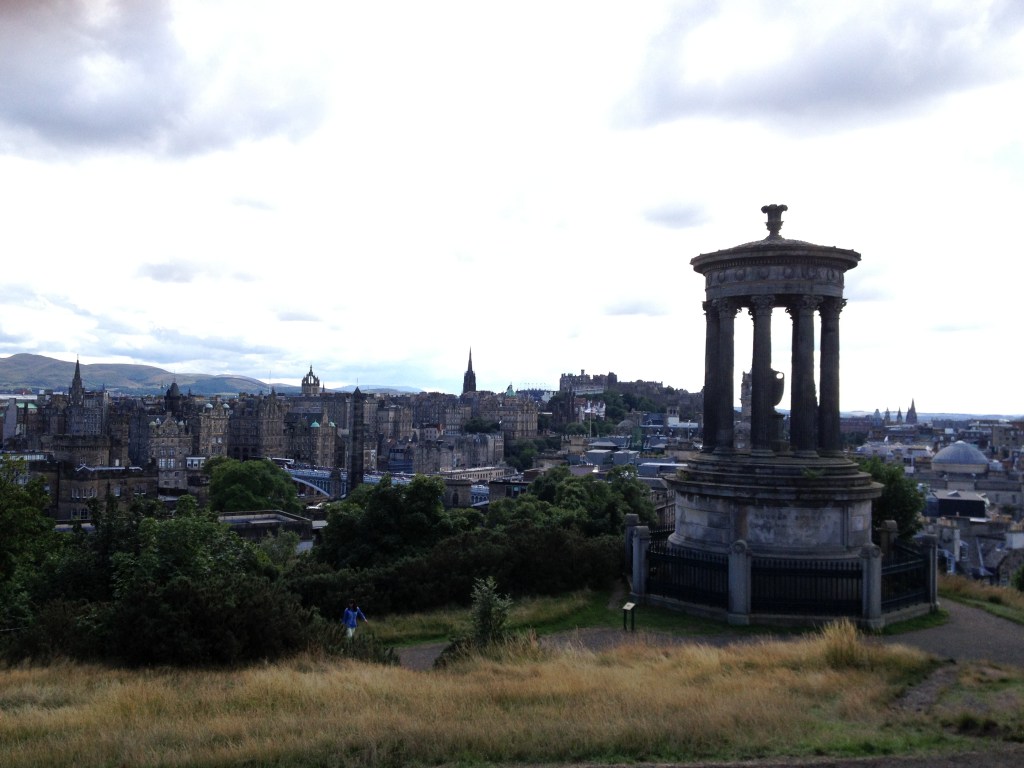
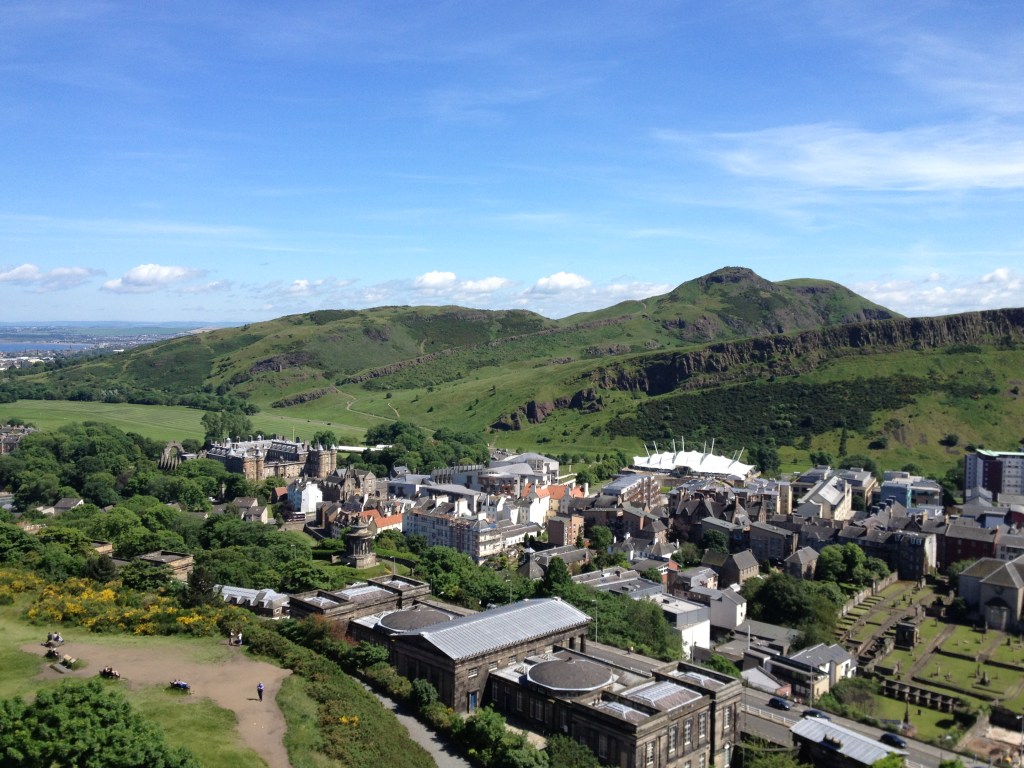
Calton Hill is a spectacular collection of monuments sat in the middle of Edinburgh. You can see little sneak peeks of stone from the main road, just popping up from behind the trees, and you’ll be so intrigued that you’ll find the little slip of a path that takes you up (a fair few) stairs to the top of the hill. There it opens up and you’ll find Nelson’s Monument, which you can climb up if you haven’t had enough stairs, the National Monument, which you would think has come straight out of Athens, and the City Observatory. Beyond that is a stunning view of the whole city (if you’re there on a clear day), and it is truly beautiful. On that day, I stood there and felt on top of the world, ready to take on my studies and conquer my nerves. 

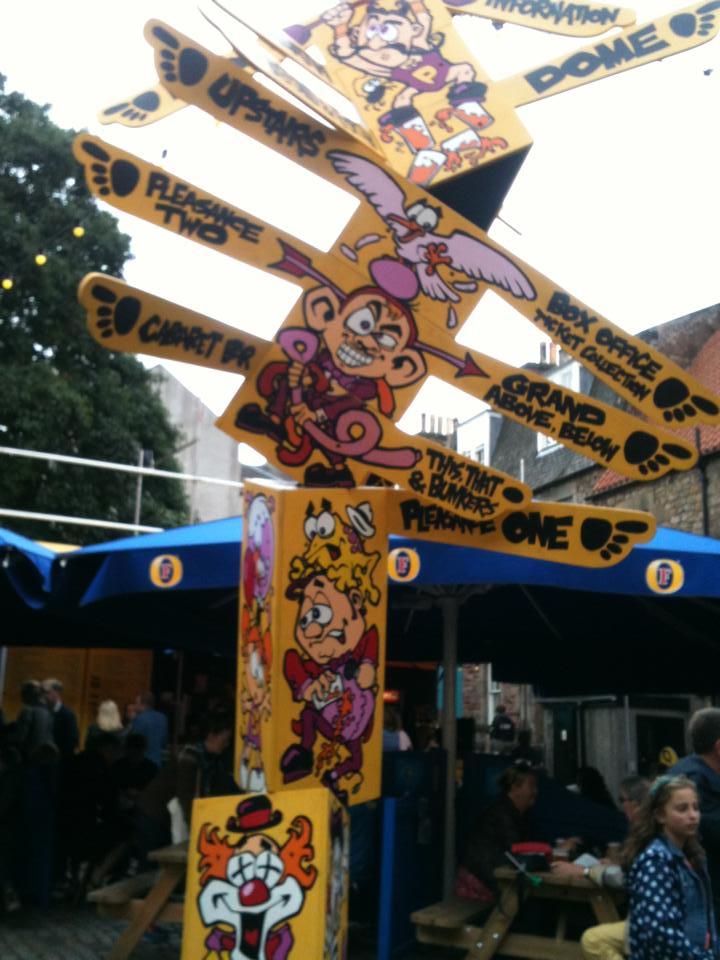
I arrived at the start of August with no real clue about the Fringe festival or the sheer scale of it. Like a complete novice I wandered around the city in the first month, watching the street performers and singing groups the full way up the Royal Mile, and it felt as though everyone wanted to give you a flyer. The city was heaving with people and full of excitement, every inch of it covered in posters with the barmiest designs.

I felt like I became a comedy connoisseur during my first time at the Fringe: if I heard a show was good, I would try and get myself there. I saw so many acts in the most random of locations from cellars, to lecture theatres to graduation halls. I saw performers who I’d never heard of before who then became household names like Luisa Omeilan, Aisling Bea, Sara Pascoe and Romesh Ranganathan. I became an expert at finding the small alleyways to decrease my travel time between venues. I saw comedy shows, plays, podcast recordings. Being alone meant I could I always find a single seat close to the front to slip into. In that first month I spent the majority of my money and developed a horrible cold, but it was exhilarating.

I was lucky that two Fringe festivals book ended my time in Edinburgh. It is one of the greatest festivals on earth and an experience that I thoroughly recommend.

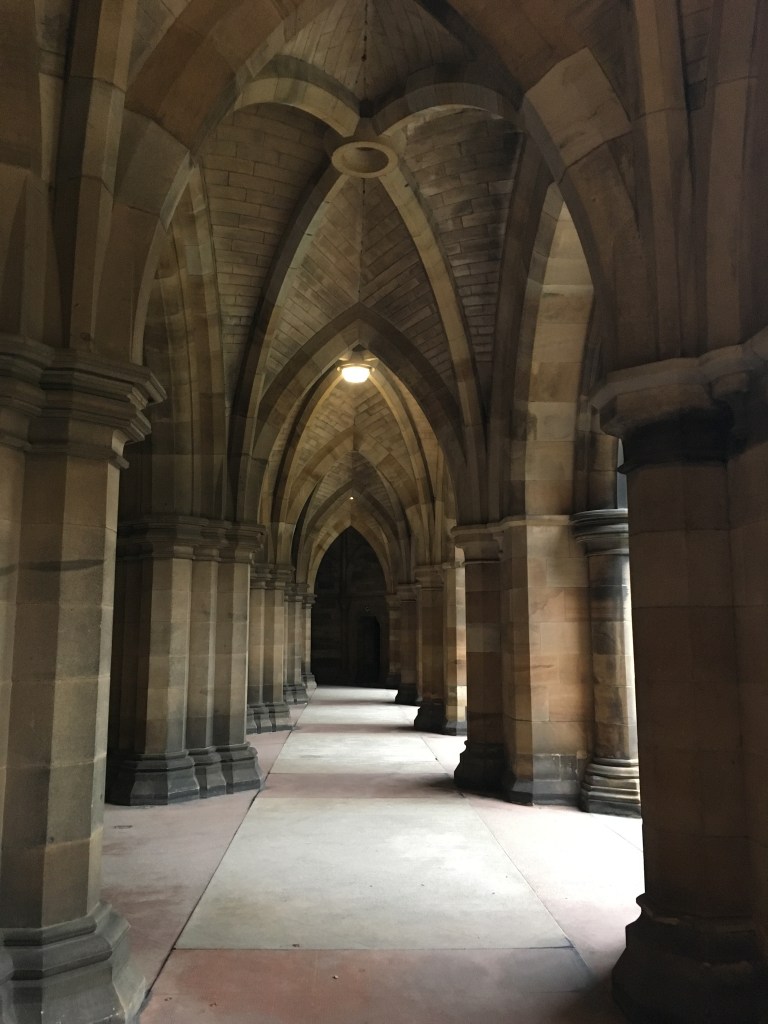
Oh, the plans I had to explore Edinburgh and Scotland whilst I was studying. I had envisioned trips to the highlands to stay in remote cottages and write essays overlooking lochs and mountains. Nights in B&Bs, getting up early to go on long hikes in the great outdoors to get inspiration. In the end I never really got the chance to open the Rough Guide to Scotland that I resolutely carried round in my backpack until it became dog-eared at the corners. I actually spent most of my time in my room, nose to book, questioning my own intelligence. It was years later when I went to Glasgow to visit a School friend that I booked myself on buses up and down the country to see all the lochs, castles and hills that I could.

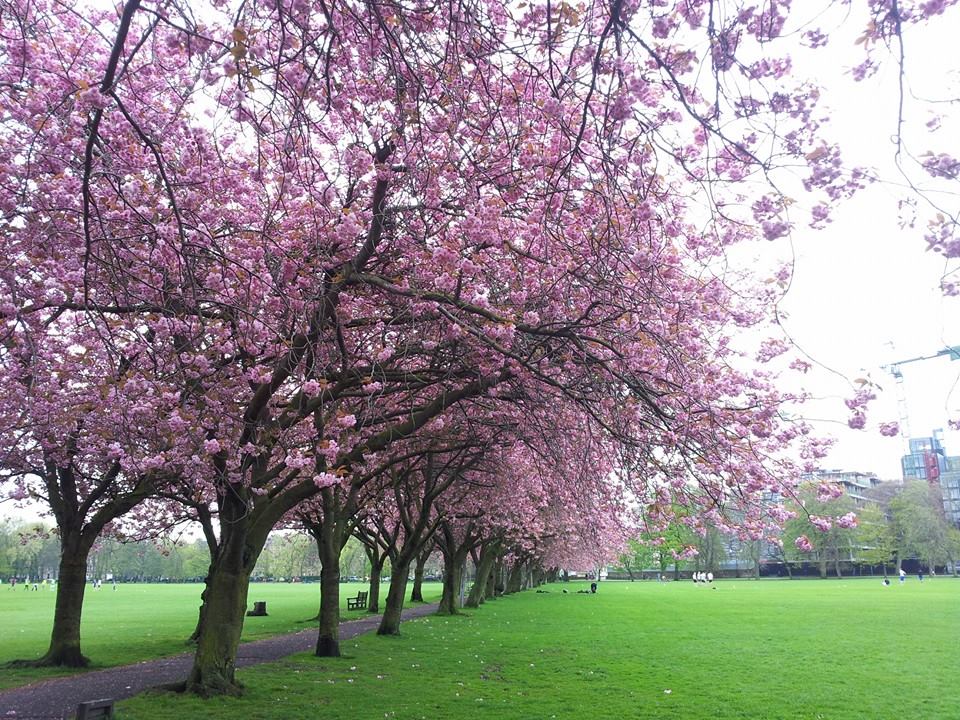
One thing I never tired of, no matter the pressure I felt when I was studying in Edinburgh, was the walk from my flat to the University. Each morning that I stepped out of the flat, went down the three flights of stone steps and out of the huge red door, I would come out at the top of a hill overlooking the Meadows. I would set off down the hill past the other tall tenement houses with their brightly coloured doors and neat privet hedges, down and down over the cobbles. The Meadows is, as it says on tin, a grassy area, and one of my favourite spots to read in Edinburgh when the sun’s out. It is full of trees covered in pink candyfloss blossom in Spring and drunk students having bbqs in Summer. Edinburgh was the city that looked after me.

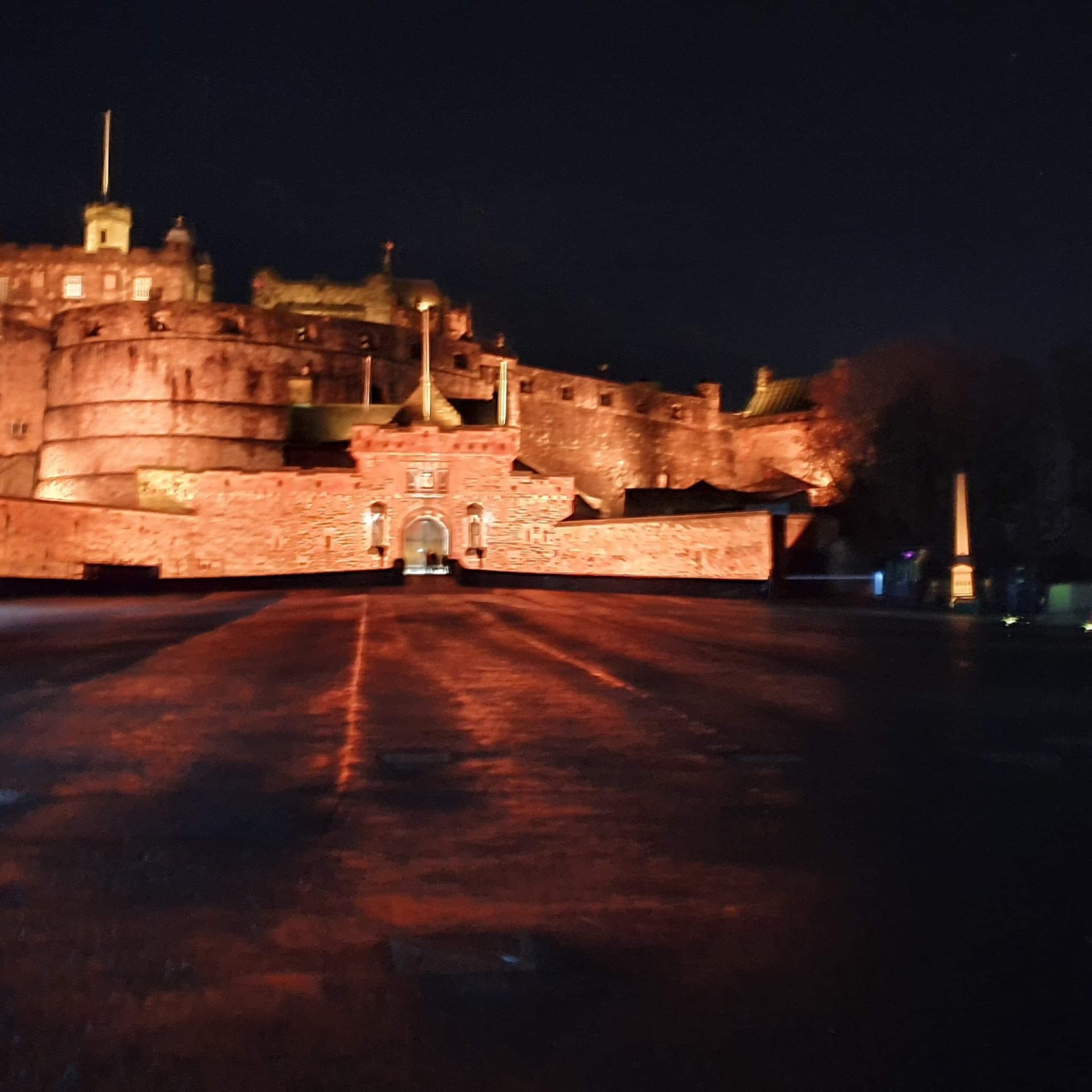
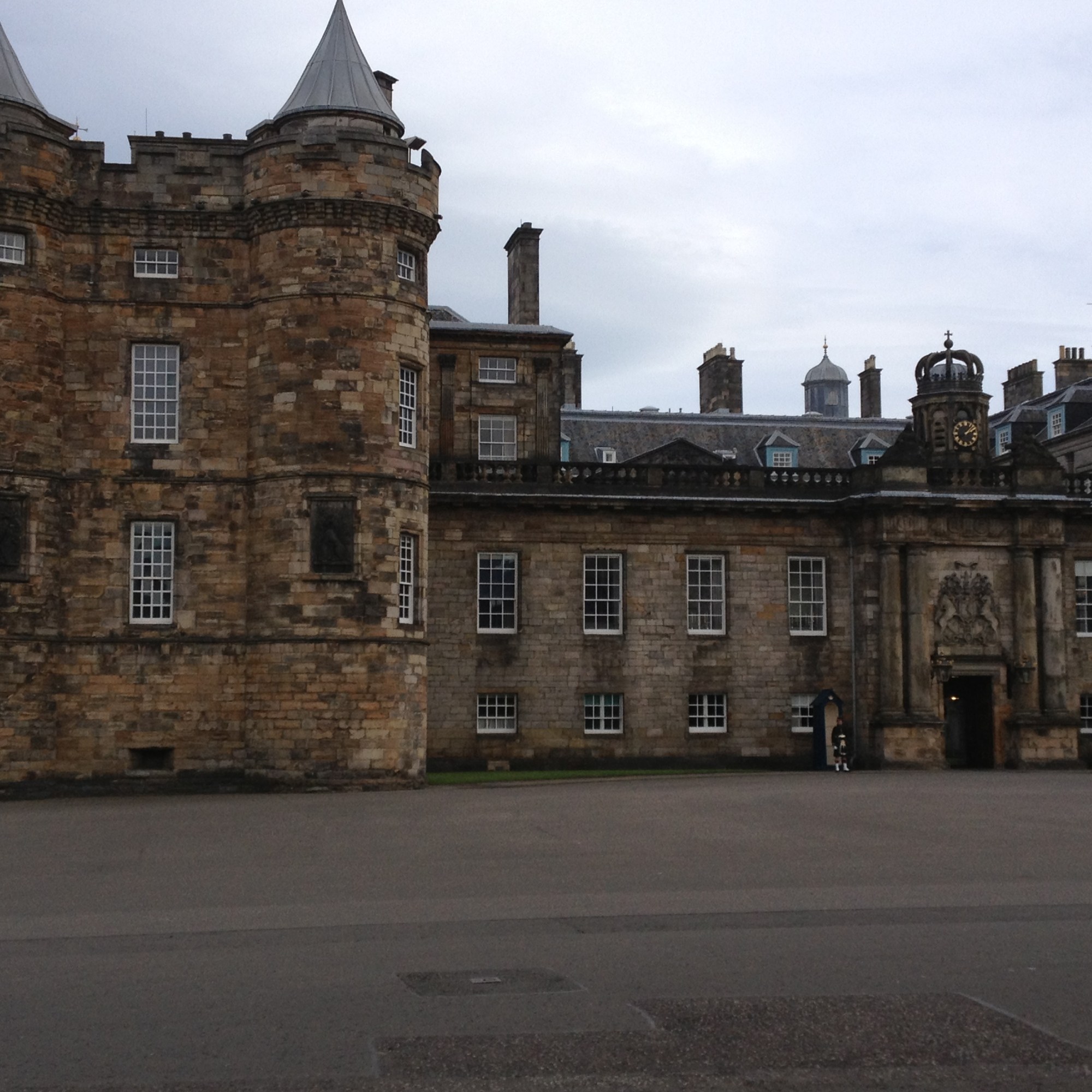
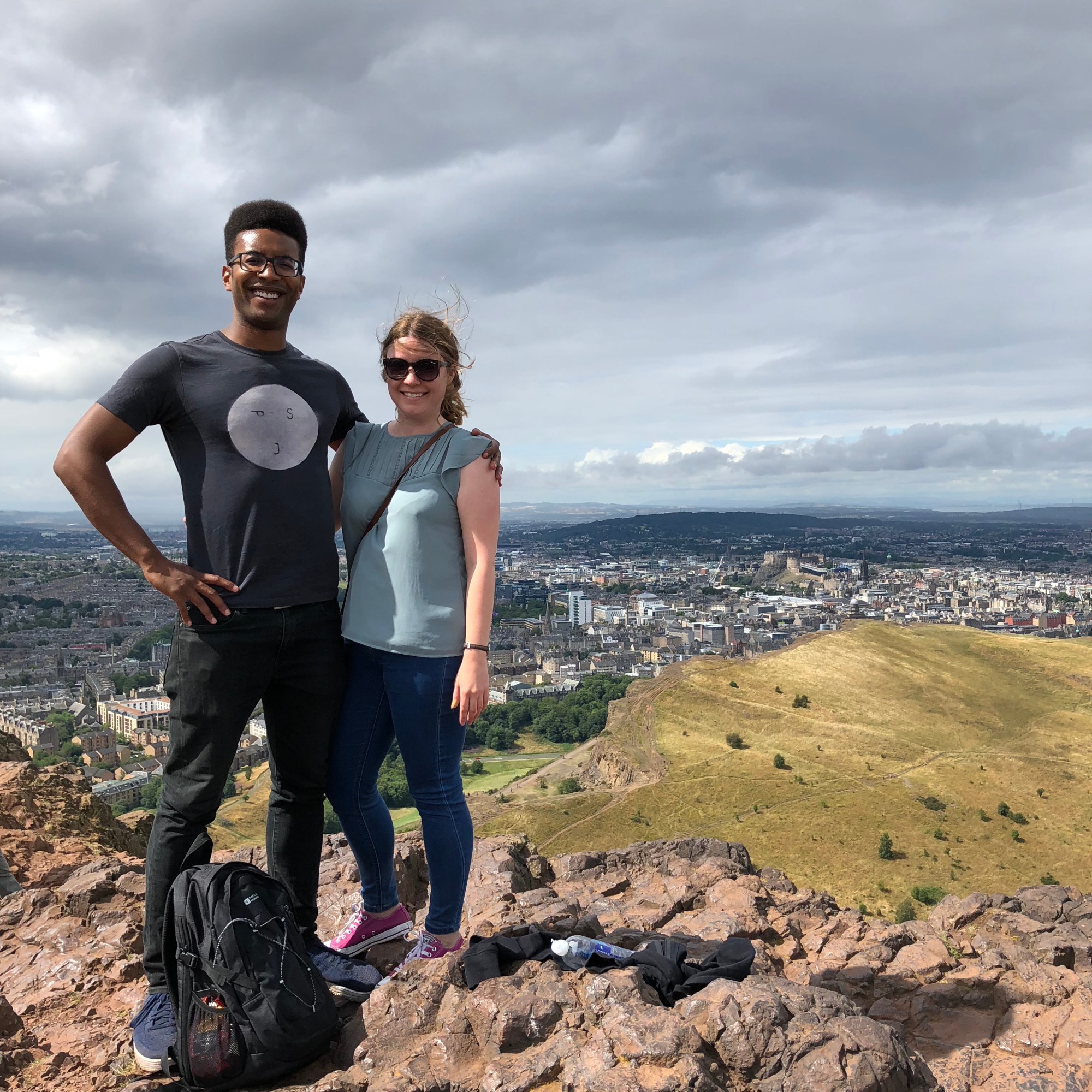
So, what to do for a weekend in Edinburgh? If the weather looks cold and/or rainy, good footwear is a priority! Have a good walk around the city and go up Calton Hill for my favourite view. The Royal Mile which has the castle at one end (which does great free tours), and the Palace of Holyrood (great giftshop) and the Scottish Parliament building at the other (which also has a really interesting tour). My boyfriend and I climbed up Arthur’s Seat the last time we visited Edinburgh having been assured it was an “easy” walk. We nearly died, but we had had a late night at the Fringe the night before…. Great for views from the top though and an all round sense of achievement. Also: good hangover cure.

After all the walking it’s time for cake in cafes to warm up – the Scottish Café in the Scottish National Gallery always has a great selection of hot drinks and cakes with a lovely view over Princes Street gardens. Dough on Rose Street does fabulously delicious pizza. Hadrian’s Brasserie in the Balmoral Hotel is also a lovely place to eat, for something a little fancier. In Marchmont, there is a fantastic café called Toast that does the best breakfasts.

My other hint is to book a hotel in Haymarket, it’s sometime a little cheaper and not that much of a walk to the main city centre.

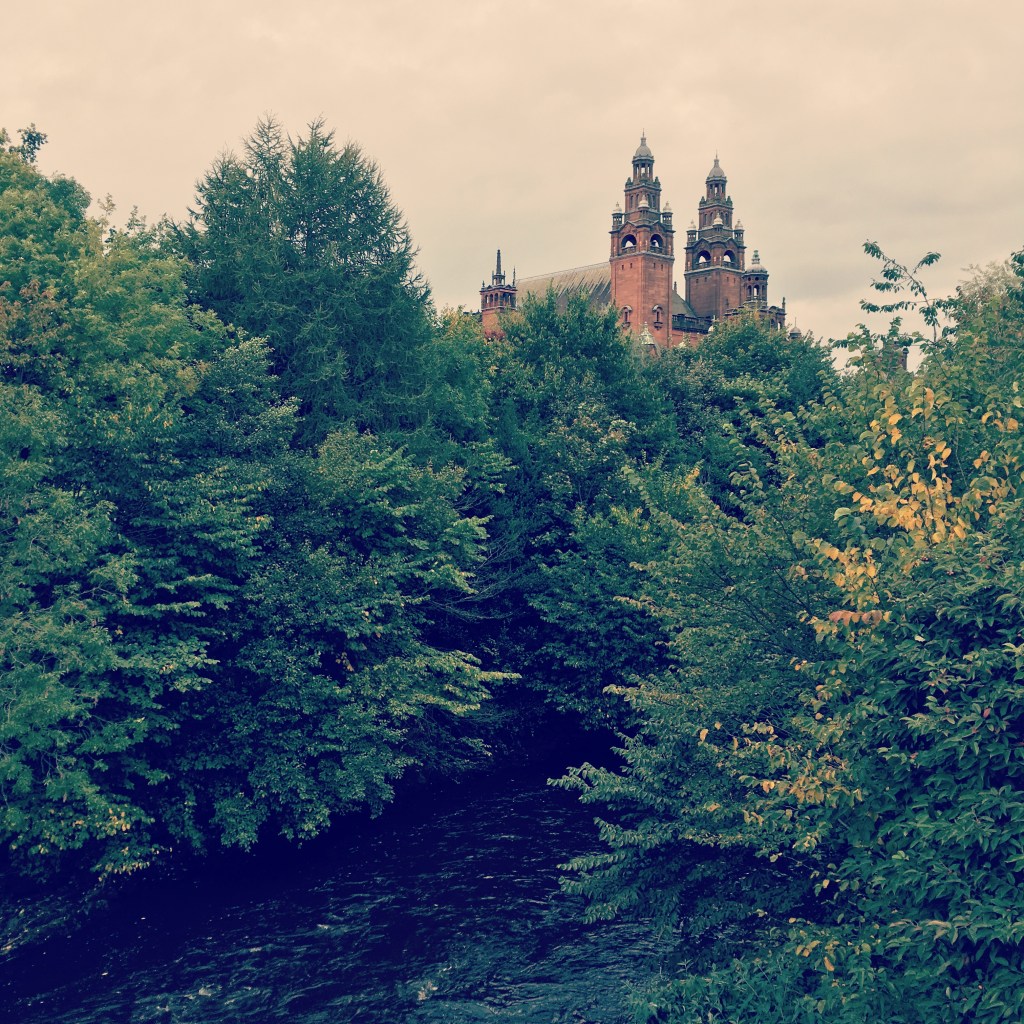
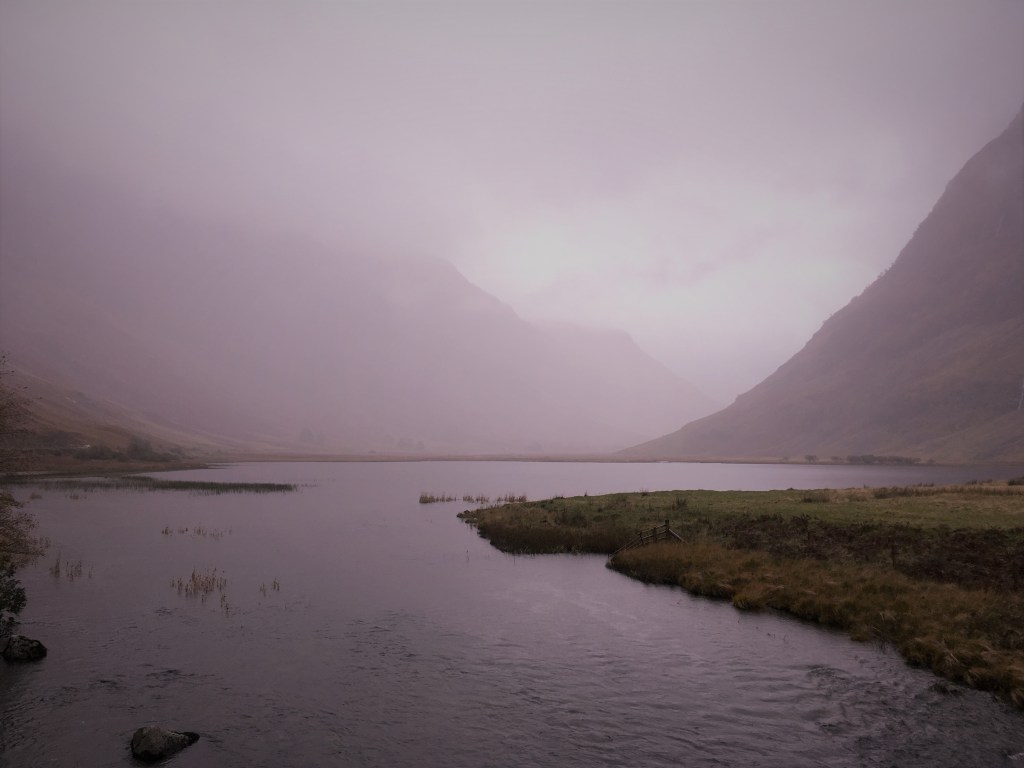
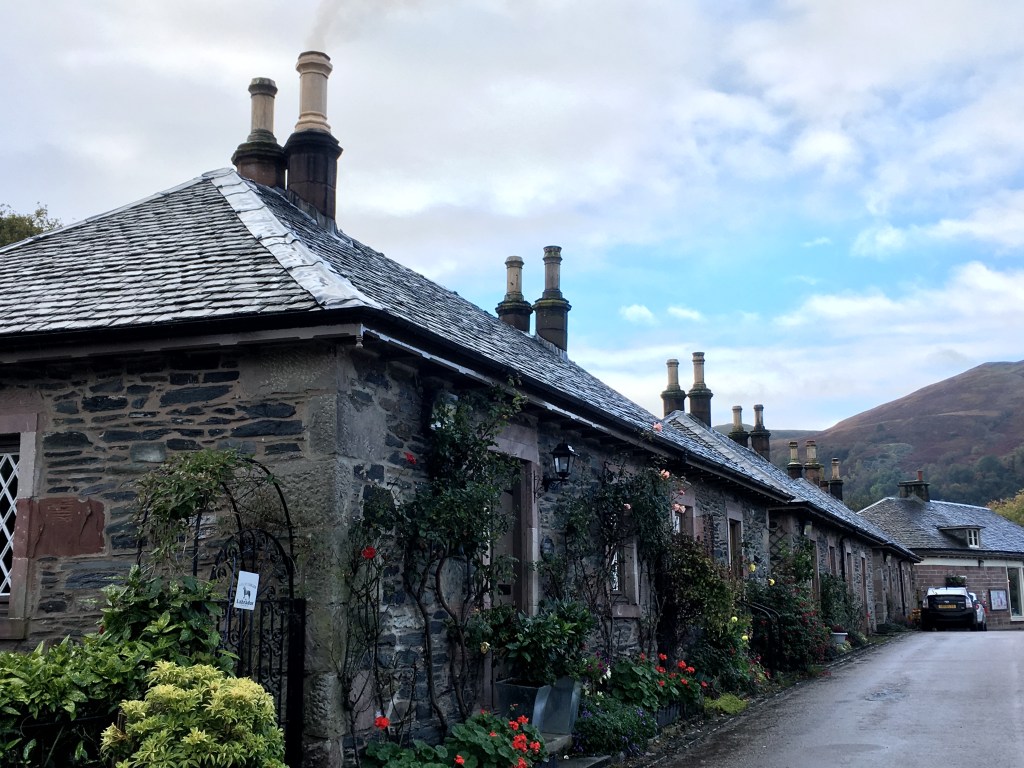
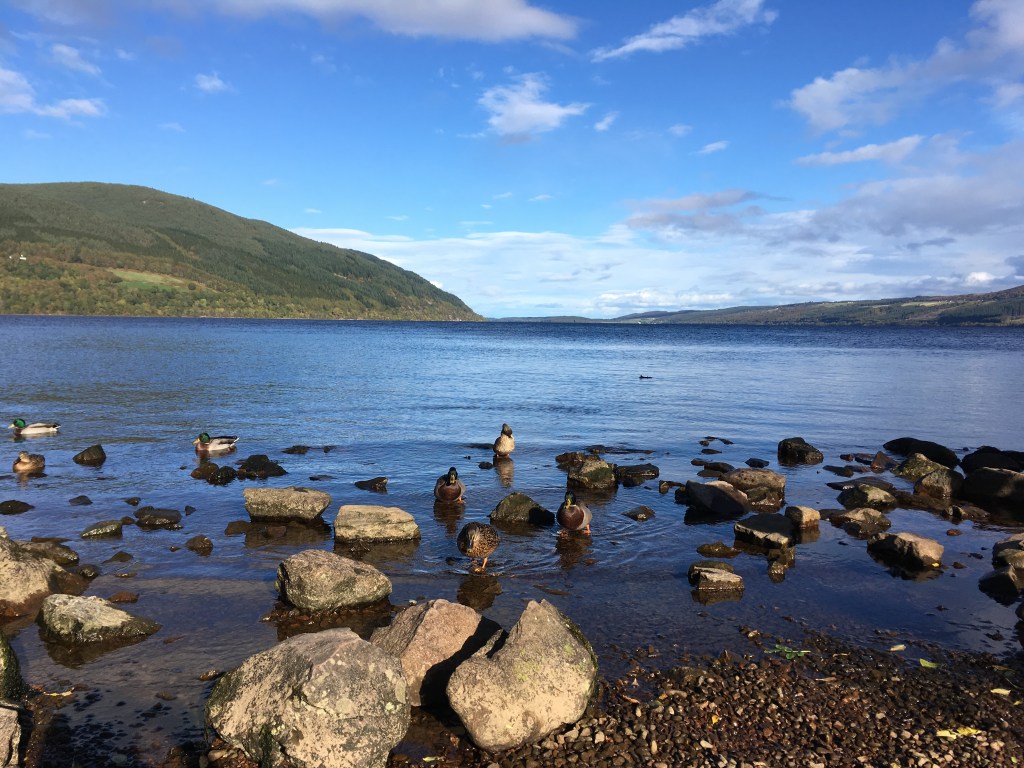
Outside of Edinburgh, Glasgow is a fantastic city to visit with so many museums to wander round (the Kelvingrove is gorgeous), also the botanical gardens are lovely to sit in and have a coffee. I also used it as a base to travel to Loch Lomond and Luss, and Loch Ness. I used Discover Scotland Tours – the guides were all friendly and they fit a lot into a day’s travelling. Through them I also saw a very damp Glencoe (well, I saw a lot of mist, but I really got the atmosphere of the place!) and Stirling Castle.  

Glencoe through the fog

There’s still so many places I want to visit in Scotland including the Isles of Mull, Iona and Skye. One day… Any recommendations for these places? Let me know!

Book Review: A Half-Baked Idea, by Olivia Potts

This is book is so special to me in ways that I can’t really describe. In it Olivia Potts describes the pain of losing her mother, but also finding hope through baking.

It’s no surprise that death changes you. It happens in glaringly obvious ways, like weight change or ill health… For others, death brings a manic embrace of life, a desire to make hay while the sun shines. These people run ultra-marathons and travel the world. Others find their faith, or lose it.

…My world had been thrown into uncertainty, and that had established in me a new feeling that was both paralysing and exciting: my future was in my hands.

A Half-Baked Idea

After her mother’s death, Potts decides to leave her job as a lawyer to train in patisserie at the Cordon Bleu cookery school. The book talks about grief but also contains some truly mouth-watering descriptions of desserts, pastry, meringues, crème brûlée… I could go on.

Being in the kitchen made me feel grounded and calm. But I wanted so much more. I wanted to learn how to make perfect éclairs and beautiful brioche; I wanted to understand chocolate, and be able to put something on a plate in a way that suggested something other than ‘compost heap.’

A Half-Baked Idea

The first time I read through the book I stopped and started with it. I would read a few chapters, have a break and read something else, and then come back to it. It was too much for me and made me think of losing my mum. I needed the pauses to gather myself. But I always came back to it and the second time I read it straight through.

I’d spoken to my mother earlier that day on the phone… She’d yawned and we’d said goodbye to each other.

I didn’t know then what I would know sixteen hours later: that that yawn was a death knell, a swan song; a yawn – so commonplace, so trivial – that meant she wasn’t getting enough oxygen. A yawn that said she was dying. Later, I would replay that conversation, that yawn, over and over again. Her body was already preparing itself for what would happen over the next few hours.

A Half-Baked Idea

I read that, put the book down, and cried. Even typing that quote out now has made me feel emotional. I’m an only child and incredibly close to both my parents and I speak to my mum every day.

Maybe it was the warmth and the humour in the book that always brought me back to it and you do get a great sense of what it is like at the Cordon Bleu. Anyone who has ever turned up to something on their first day and felt completely out of their depth will relate to it. I loved the moment Potts recalls looking at a banana she’s been asked to cut up for a fruit salad and wondering if they are even real.

The descriptions of things she makes at cookery school are also to die for. There’s a description of buttercream as “bonkers… richer than Rockefeller, and less subtle than Liberace in its sweetness” that made me smile. Do not read this book unless you have something sweet ready; trust me, there is nothing worse than reading four pages on making genoise à la confiture de framboise (which contains the bonkers buttercream), to find out that you don’t even have one little biscuit in the house to ease the sugar cravings.

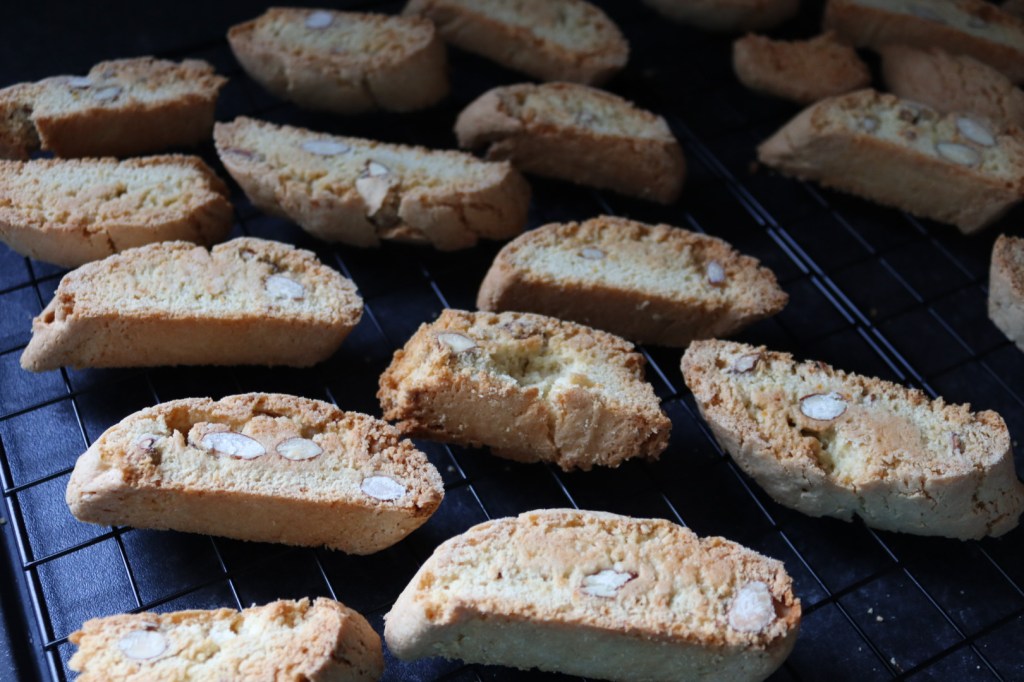
Each chapter of the book also ends with a recipe, including shepherd’s pie, crème caramel and a passionfruit and milk chocolate pavlova. In the name of research, I tried making a couple of them. I was going to do a sweet and a savoury recipe but my sweet tooth is way too strong when it comes to making food-based decisions, and I ended up making the banana and rolo loaf cake (yum) and cantuccini. I hadn’t heard of cantuccini before but they are a kind of Tuscan biscotti usually made with Vin Santo (a pudding wine that I subbed with amaretto, as Potts suggests to do if you can’t get Vin Santo, this is all sounding very lovely and almondy, isn’t it?).

I wasn’t brave enough to try the chocolate fondants… we’ve all seen Masterchef.

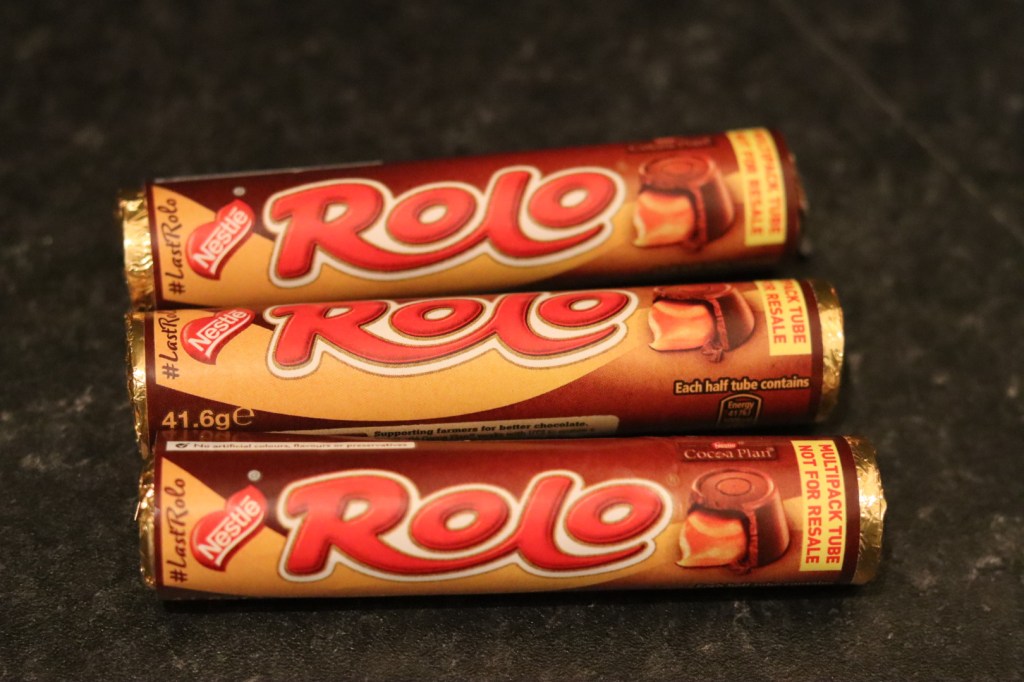
For the banana cake, the first challenge was sourcing rolos: I didn’t realise how popular they are! Is it a lockdown craving? Are there queues in the morning that I am unaware about, people dashing in ready to pick up their rolos. I tried all my local shops and supermarkets, until finally some were sourced in the big city by my boyfriend.
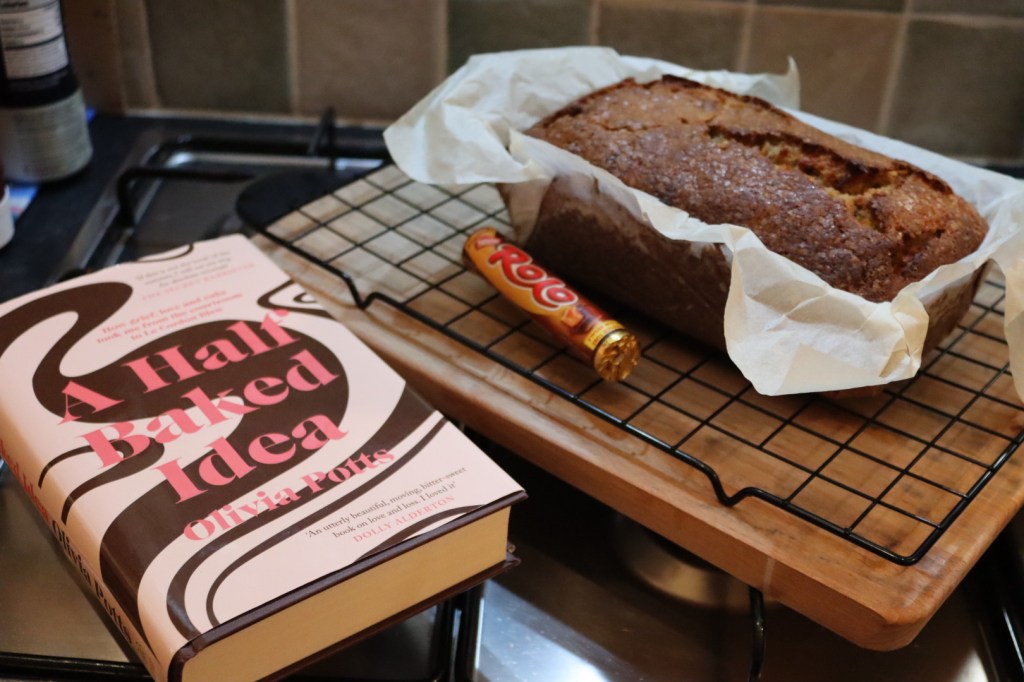
The recipe for the loaf cake was very simple to follow and it was all going really well until I took out of the oven. Now I’m sure, certain in fact, that when I prodded it with a knife to check it was cooked all the way through, the knife came out clean each time. However, once I sliced into it, I realised there was a bit right in the middle, just under the surface, that was maybe just definitely a bit raw. But, so long as you ate around that, it was lovely!

The cantuccini were also a delight to make (part from horrible flashbacks I got upon opening the Disaronno to a hen party where I drank a lot of the stuff and had to take myself to bed embarrassingly early…).

For the cantuccini, you mix together the ingredients to form a dough which you then separate and roll out into three sausage shapes. These then bake in the oven and fill your home with the most gorgeous citrusy smells. You then take them out and, once cool enough to handle, you slice them diagonally into the individual biscuits. This is where I made a few errors as the biscuits crumbled and cracked as I tried to slice (I don’t know if this means they were also under-baked, maybe I’m just a serial under-baker), anyway, I picked up the pace and tried to slice them so fast they didn’t know what was happening and therefore didn’t have time to crumble. They then return to the oven and finish baking and harden up. They were monsters in size and had the potential to crack a tooth but, my goodness, there were lovely.

The book is an emotional read, so moving and tender from having to choose the music at the funeral to deciding what to do with her mother’s belongings, but at the same time Potts writes it in an uplifting way that is full of love and warmth. I also defy anyone to read this book and not want to enrol immediately at the Cordon Bleu to learn about patisserie (you get to learn about wine and cheese too, people!)

One Month Review

Please don’t let fear be the thing that stops you from pursuing your passions. Do you know what is even more scary than failure? Inaction. If you try and fail, you’ll survive, but if you never even dare to take that step, then you’ll never know what you could have achieved. Inaction is the biggest risk of all.

Adrienne Herbert, The Power Hour: How to Focus on your Goals and Create a Life You Love

On the 16 April I published my first two blog posts: one was a little introduction about myself and the second was a book review. I was so nervous about the prospect of people reading the first post (as it was personal and about my confidence issues), that I published the second immediately after as I thought might be a distraction technique. To this day, my first post has been my most popular and has had the most interactions.

I set up my WordPress site back in January 2020 (thinking it would be a travel blog as I had lots of trips planned for 2020…) and it took me until April 2021 to actually be brave enough to press publish on anything I had drafted. Since then, in one month, I have published nine posts and between twelve and two people have read each of them. This might not sound a lot, but to me, it is incredible. I only thought my mum and dad would read them (hello, you two!) but with each new post I have felt myself grow in confidence and I now look forward to the two days a week when I post (Tuesdays and Fridays).

I decided to write this mini-post to firstly celebrate my first month of blogging, but also to talk about some of the women who have been inspiring me to actually get out there and do it.

So, in January 2021, after the year we had all had, I’d found every excuse under the sun as to why I shouldn’t be posting on a blog. It wasn’t the right time, I was too stressed with work, no one would want to read what I had to say. But when January rolled around I felt a real internal drive to change my attitude. I was fed up of constantly feeling too tired or too stressed to read or write and I was fed up of feeling like it was other people that needed to change in order for me to feel better about myself. I looked back at times in my life when I had felt my most carefree and confident and realised that was a few years ago when I was a regular gym-goer. So I decided to set up a new exercise routine, which did feel a bit of a New Year’s Resolution kind of cliché, but I started it and it has stuck.

Alice Liveing (pic from her website https://alice-liveing.co.uk/)

I began Alice Liveing’s January Give Me Strength challenge on her Instagram lives. Four mornings a week Alice had me up at 7am in my little front room to lift some dumbbells, squat, lunge, and begin to work up the strength to do a full press-up. I love Alice’s bright and happy personality, her honesty about how she’s feeling, and her general give-it-a-go attitude: she told me to give 100% of what I had to each workout and that’s what I did. Alice also has a great podcast if you need a bit of inspiration called Give Me Strength where she interviews women like Dame Kelly Holmes and Nicola Adams about fitness but also about all aspects of wellbeing and looking after yourself.

Through Alice, I found Adrienne Herbert who’s podcast and book, both called The Power Hour, have had such a huge impact on my mental health and wellbeing. Adrienne introduced me to the simple yet powerful concept of getting up an hour earlier each morning to do something I enjoy and purely for myself, before work starts to kick off my day in a positive way. Whether that be exercise, yoga, meditation, or an hour reading in bed with a cup of tea, it has revolutionised my mornings. Since I started working from home, it had become so easy to set the alarm later and later and giving in to the temptation of the snooze button, then logging on still in my dressing gown. Well, not anymore. By the time I log on I have already had a great start to my day.

Adrienne Herbert (pic from her website http://adriennelondon.com/)

Adrienne also has some really inspiring speakers on her podcast. They are quite often business owners who talk about what they have done to get themselves to where they are today and the routines they have developed to protect their mental health and keep them productive. Liz Earle, Ella Mills, and also Phoebe Greenacre, who is my next inspirational lady, have all been guests.

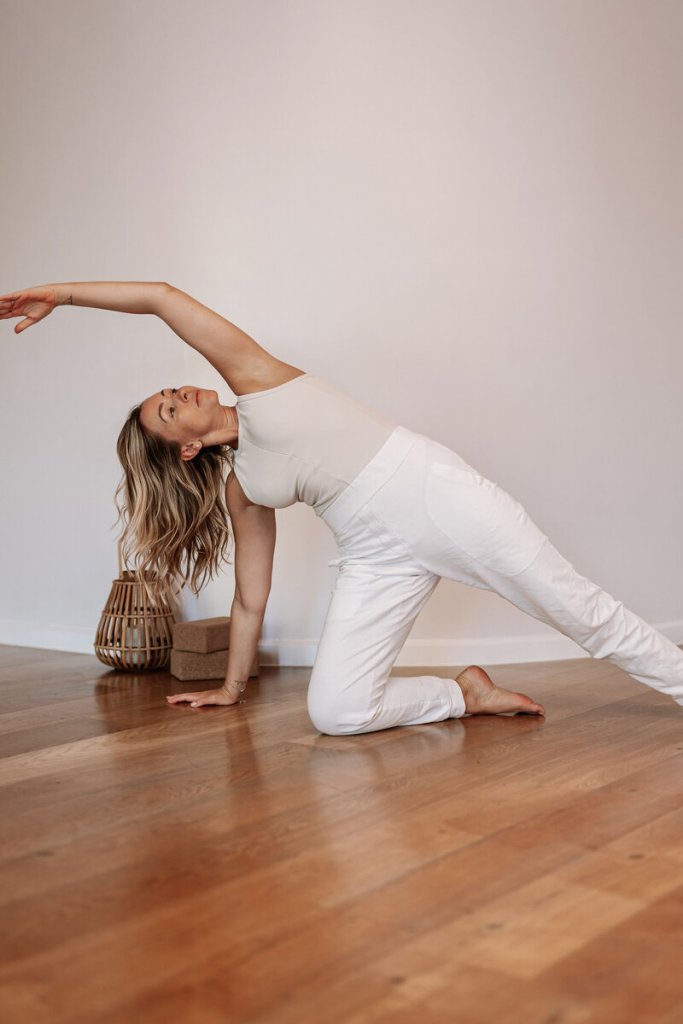
On her episode with Adrienne, Phoebe talked about being in a well-paid London job but feeling like she was “so much more than her little desk.” She quit her job at 30 and went travelling, came back to no home and no money, and has worked slowly but steadily to set up her own (now hugely successful) businesses.  Phoebe set up The Self Care Space during the pandemic as a place for women to go to find guided meditations and yoga practices to reconnect with themselves. As a woman who wants to set up a yoga-base business, I found this very inspiring.

Phoebe Greenacre (pic from The Self Care Space https://theselfcarespace.co/)

I was able to ask Phoebe for her advice recently (as part of her business coaching course), on how to move past being so afraid of failure that you struggle to start; she said to think back on other times when you’ve felt afraid doing something, but you’ve done it and survived – let that inspire you. It gets easier and one day you will look back and see the journey you’ve been on.

Feeling the fear is also something that Chloe Brotheridge talks about in her book The Confidence Solution. This book I’ve been reading in my power hours and I cannot recommend it enough for women who have ever felt short on confidence – I have had some real ‘a-ha’ moments reading it. In the book, Chloe explains how to retrain your brain to overcome fear. One is example is go into a situation that scares you and don’t die. Your brain will then learn that you won’t die, and you are in fact safe to go into another situation. Repeat and celebrate all the small wins.

Now when I am feeling the fear I have tangible experiences to look back on and see that I’m still well and truly alive: I joined a business coaching course and spoke up, didn’t die. I set up a WordPress site and posted some content, didn’t die. Now, I am celebrating that I have nine posts out in the world (and lot’s more being drafted), by writing this.

Confidence comes from taking brave action. Fear shrinks when you walk towards it, so start planning… It’s time to act.

The Confidence Solution: Seven Steps to Confidence, Chloe Brotheridge
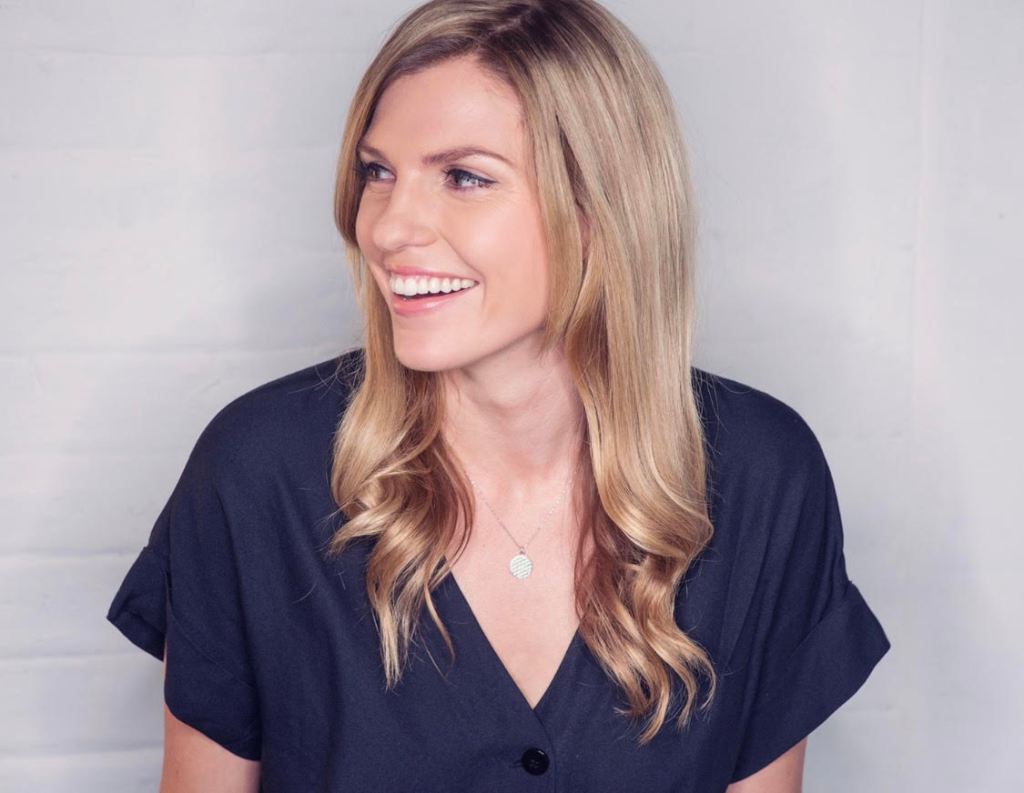
Chloe Brotheridge (pic taken from her website https://calmer-you.com/)

Chloe also has a podcast called The Calmer You, and it is a lovely listen about quietening the inner critic and generally being calmer in life.

Well, this turned out to not be such a mini-post after all! But I wanted to write it in case it finds its way in front of someone else who has been hesitating over that ‘Publish’ button, waiting for “the right time” to press it. Now is the right time! But if you feel you need a little boost then please do check out Alice, Adrienne, Phoebe and Chloe (I’ll put links below) – I cannot tell you how much of an impact they have had on me.
Links and resources:

For Alice Liveing’s website link: https://alice-liveing.co.uk/ also for Alice’s workouts, please search for her Instagram: @aliceliveing(app coming soon)

For Adrienne Herbert’s website link: http://adriennelondon.com/ and please do read her book The Power Hour: How to Focus on your Goals and Create a Life You Love and listen to her podcast The Power Hour

For Phoebe Greenacre’s website link: https://theselfcarespace.co/ and her business course is called Conscious Business Coaching

For Chloe Brotheridge’s website link: https://calmer-you.com/ and please do read her book The Confidence Solution: Seven Steps to Confidence and listen to her podcast The Calmer You

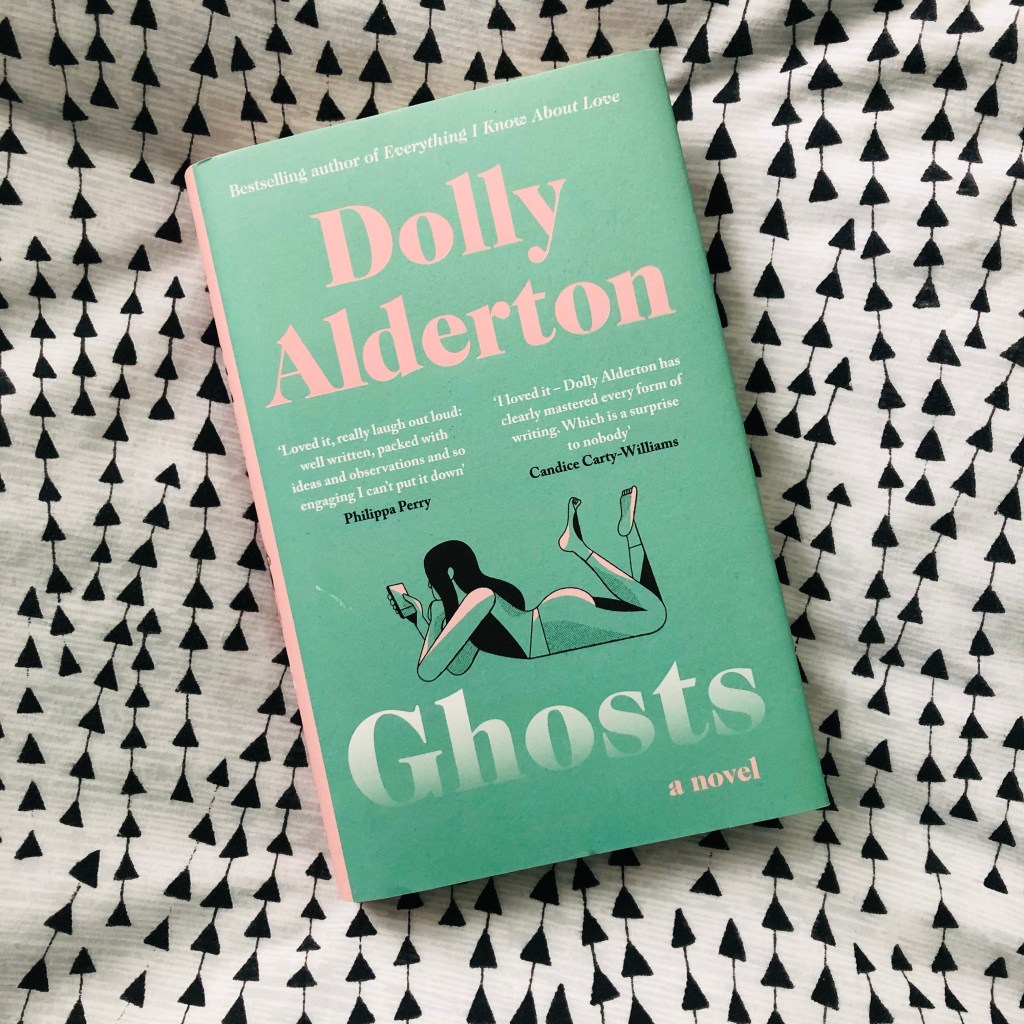
Book Review: Ghosts, by Dolly Alderton

‘I got ghosted last week.’

‘What does that mean?’

‘It’s when a person just stops speaking to you instead of having a break-up conversation.’

‘Why’s it called ghosting?’

‘Number of schools of thought,’ she said, with the command of an academic. ‘Mostly commonly, it is thought to have come from the idea that you are haunted by someone who vanishes, you don’t get any closure. Others have said it derives from the three grey dots that appear ten disappear when someone is writing you an iMessage and then doesn’t send it. Because it looks ghostly.’

Ghosts

It’s been a while since I’ve stayed up into the early hours to finish reading a book (I need my beauty sleep!) but then along came Dolly’s Ghosts.

Dolly Alderton is two years older than me (two! WTF have I been doing with my life *shakes head and sighs into the keyboard*), and in her writing I have seen some of my life experiences reflected back at me. I wanted to put ‘voice of my generation’ there but it felt too cliché. You get what I’m trying to say. This is also a perfect demonstration of why she is an award-winning author and I’m not. Even though she’s only two years older than me. Why did I look that up.
A friend lent me Everything I Know about Love and when I read it I felt some things in my life that I hadn’t fully understood up until that point fall into place. If you haven’t read it, I cannot recommend it enough. Her mantra at the end of “I am enough. I am enough” resounded through my body as I read it and settled deep within. Even now, in moments of self-doubt I will repeat “I am enough” to myself.

I’m also a huge fan (was a huge fan, I should say as it has now finished running) of her podcast The High Low with Pandora Sykes. I’ve bought many a book on their recommendation. I’d say it’s been struggle knowing what to read now that the podcast is no more but it hasn’t at all, thanks Twitter.

Safe to say, Dolly has a special place in my bookish heart.

So, to the book. Ghosts follows Nina Dean who meets a guy called Max on a night out; they have a great time and she starts to find herself falling for him when, with no warning, one day he just completely vanishes. Nina is also facing challenges in other areas of her life: her father has become ill with dementia, she is trying to write a new cookbook for her publisher, and a new noisy neighbour has moved into the flat below her (ruining her beauty sleep). Nina is also seeing her friendships change as those close to her start getting married and having babies. Ghosts is about love and relationships but it is so much more than that. It’s a story about the strange kind of pressure of being surrounded by what appear to be perfect couples and feeling like everyone else has their lives together.

For me, the book so perfectly portrayed the shifts within our social groups as we start to transition from our twenties into our thirties. The way the book encapsulated some of the experiences I have had reminded me of a line in The History Boys by Alan Bennett: The best moments in reading are when you come across something – a thought, a feeling, a way of looking at things – which you had thought special and particular to you. There were so many scenes I read and thought: yes, that’s what it’s like! For example, one scene where Nina visits a friend who has just had a baby, it not only captured a discussion about perineum massages that I had actually just had with my own friends, but also how I feel looking to the future and noticing these shifts taking place:

Five years ago, I could barely have differentiated between a one-year-old and a one-day-old baby. Now, I knew about Braxton Hicks and mastitis and pre-labour perineum massage. I know about sleep training, growth spurts, teething and potty training. The lexicon of our peer group morphed on every decade. Soon I would know about school-catchment areas, then university applications, then pension schemes. Then care homes, then the name of every funeral parlour in my postcode.

Ghosts

Honourable mentions in the Yes, that’s what it’s like! category must also go to Dolly’s agonisingly perfect descriptions of hen-dos (the games, am I right? the bossy lead bridesmaid, we all know one) and the wedding itself, which almost floored me. The conversation topics at the wedding breakfast were so on the nose and had me laughing such as the way married couples talk about being married (y’all definitely do that, by the way). The other observation that made me laugh out loud was how men’s conversational techniques at social gatherings change as they get older:

Time and time again I observed that most men think a good conversation is a conversation where they have imparted facts or information that others didn’t already know…. or given someone tips or advice on an upcoming plan, or generally left their mark on the discourse like a streak of piss against a tree trunk. If they learnt more than they conveyed over the course of an evening, they would feel low; like the party hadn’t been a success or they hadn’t been on good form.

Ghosts

That spoke volumes to me. VOLUMES. I cannot tell you how often I have observed my boyfriend’s friends do this at gatherings when they try to explain politics, economics and trigonometry to each other with all the seriousness of news-readers (I say this with love, in case they ever read this… which, let’s be honest, they probably won’t). It’s worse now that it’s all on zoom because you can’t slip away and have a side conversation.

I loved that the book just so accurately portrayed the sensations that come when friendships change uncontrollably and irreversibly, and how we adapt with them because… well, it’s time to change.

One of the most poignant parts of the novel is Nina’ relationship with her father, who is slowly losing himself to dementia, especially a scene where the two of them visit a Hungarian bakery together. Dolly also looks at Nina’s relationship with her mother as they try to rockily navigate their way through the new challenges. Nina makes mistakes and shows her flaws but it also made me think about how I would react in that situation.

The moment when Nina is ghosted by Max caused a physical reaction from me. It is shown in the book as a transcript of messages which start off between the two of them and then becomes a one-sided conversation from Nina apologising for bothering him, asking what is going on and why he isn’t responding any more. My goodness, I felt it. I felt it to the point that I had to ring my boyfriend to check that he was still there.

I want to finish this post with a personal story of being ghosted because sharing is caring guys and gals. A few years ago, I fell hard and fast for a guy at the gym. We spent a lot of time talking and getting to know each other over the dumbbells. I began imagining, as you do, the life we would build together, the holidays we would go on, the house we would live in, if only he didn’t have a girlfriend. And then, one day he told me the words I had been waiting to hear: they had broken up. All of a sudden we became friends on social media and started talking about non-gym related topics. We went out for a drink and curry and then I never heard from him again. He literally quit his membership at the gym the next week without saying a word. On the one hand, the curry wasn’t a good one. I wouldn’t recommend the place we went to and I was sorely tempted to blame it on that: I had to really chew a piece of chicken whilst also having a deep and meaningful conversation. I found out later that he had started a relationship with one of the employees at the gym. At least I came out of it looking well-toned, if crushed.

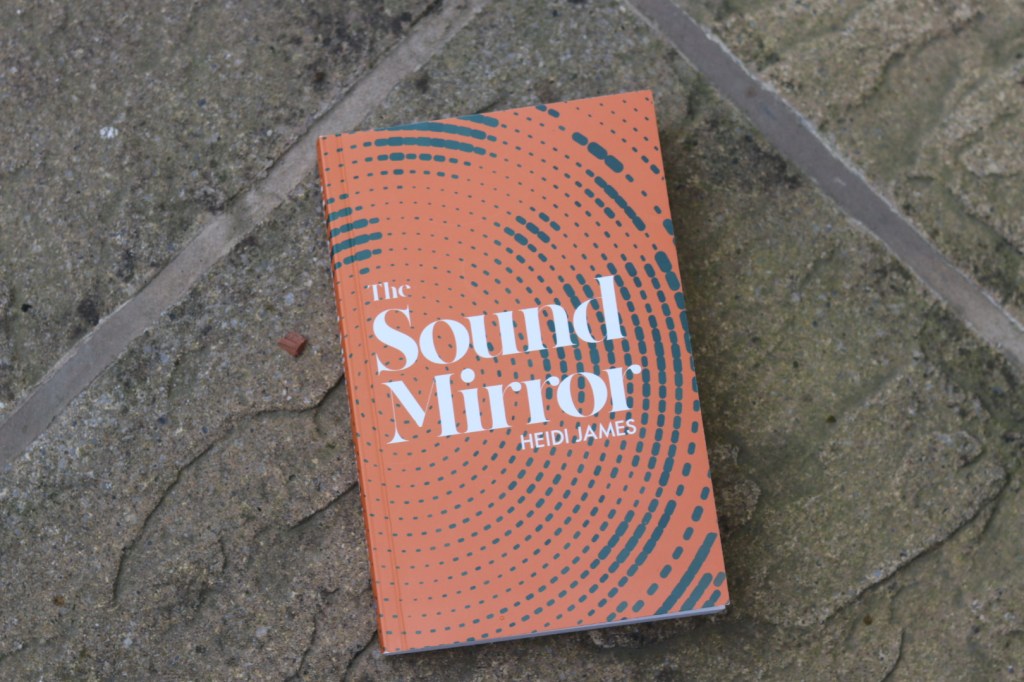
Book Review: The Sound Mirror, by Heidi James

All the knowing and wisdom, the habits and curses. Superstitions and protections, charms and jinxes.

The Sound Mirror

“She is going to kill her mother today.”

I’ll be honest, I read the opening sentence and considered putting the book straight back down again. I had just finished another book that focussed on complicated mother-daughter relationships and I wasn’t sure I was ready for another, but, by Page 10, Heidi James had me enthralled in such lovely language that I couldn’t help but stay.

It is said, she was told, that if a pregnant woman gazed at the Himalayas and wished for a beautiful child, it would be so. But now she is far from the mountains, thousands of sea miles from her ayah, from the crumbling brick of the bungalow where spiders hang like Christmas ornaments, far from the furious heat of the summer and pure wet of the monsoon, peacock blue and elephant grey, dust and cow dung, the mean hunch of vultures, tea cups and pearl inlays, the smell of engine oil and burning sugar, ghee and sandalwood…

The Sound Mirror

Is that not one of the loveliest things you have ever read? I could have lost myself in such beautifully long and descriptive sentences that flow throughout the novel. So gorgeous, I felt transported away.

But, wait, what is it about?

The Sound Mirror has three narratives: Tamara, Claire and Ada. Three different generations of women each with their own journeys and challenges. All three narratives are hard to read at times; the women face harsh men, tough choices and a lot of loneliness. Tamara is on her way to “kill” her mother and, as she drives, their complicated and sometimes abusive story unfolds. Claire found herself pregnant before she was married and was made to leave home by her father: she loves her children but struggles with what her life has become. Ada came to England from India. Experiencing racism and sexism, she marries a man and finds out very soon that marriage isn’t what she thought it would be. The plot is so full of detail and sometimes the most normal and everyday things are so imaginatively captured.

I’m also trying very hard not to give anything away because there are so many surprises!

It is a hard book to read, there is no getting away from that. It depicts incidents of racism, violence and abuse. Each of the characters also have moments where I found them intensely unlikeable. But there’s also such strong flashes of love and passion. And Heidi James’ use of language, as I’ve said, makes the book so extraordinary to read.

Holding hands they dig their toes into the pebbles and climb up the bank. The shingle shifts, tips and rolls under them, inching them back as they struggle forward. At the top they turn to see the others in miniature, still sat behind the windbreak in their deckchairs drinking tea. The sea has been dragged out, as if trapped by its own tide. Today has been a brilliant day.

The Sound Mirror

One of the other things I love about this book is that it’s one that I know I will read again and see different things in it. New imagery that I missed the first time, comments that went over my head. And that’s exciting, and quite rare for me, I don’t normally want to re-read things (too many on the TBR pile).

So, I’m sorry if this was a bit of a rubbish review: there’s so much I wanted to say but I was worried it would divulge too much of the story! And, while I recommend it, I know it’s not a book for everyone because of the subject matter. But, if you can read it, I think it is incredibly well written and that it is a story that will stay with you long after you have finished it.