I bought this book last year along with Ghosts by Dolly Alderton (which is also a fab read), and it has sat on my shelf waiting to be read. Sometimes that happens, doesn’t it? A book will sit there for years until suddenly some twist of fate encourages you to pick it up and read it at just the right time.
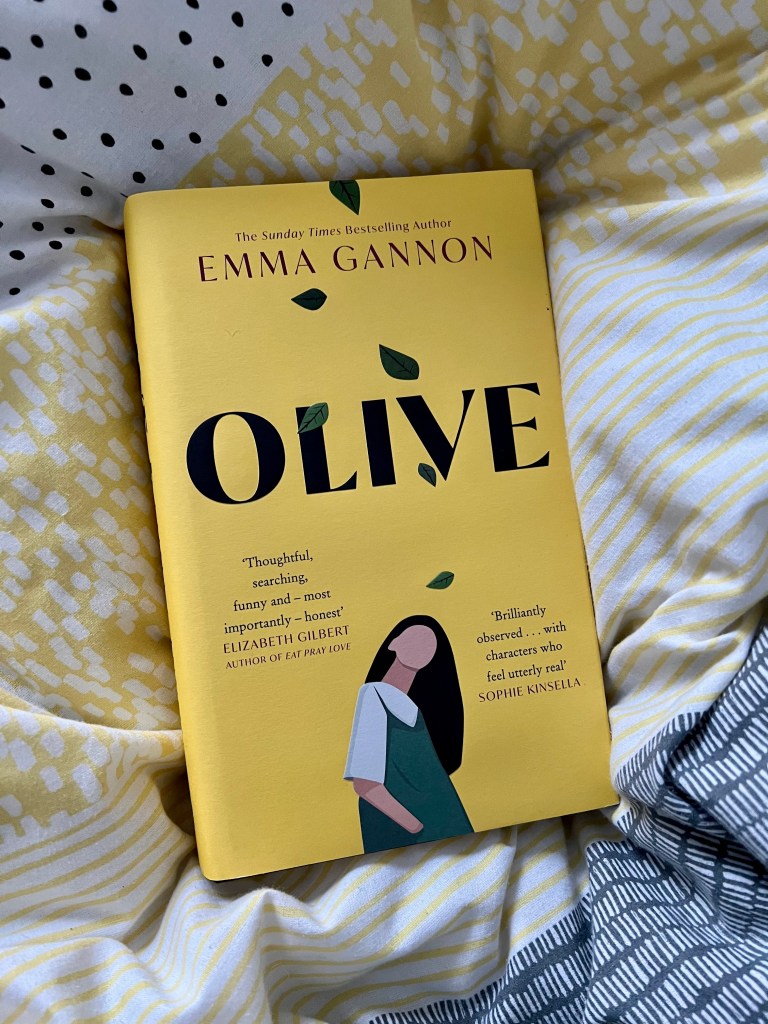
For me, I am currently watching so many of my friends step into the world of parenthood (and it is a joy to watch, as well as a very interesting one). It seemed to happen overnight that suddenly I went from knowing no parents in my close friendship circle to being the odd one out. And it does change things (obviously, how could it not), and there are now a lot more discussions about sleep regressions, teething, breastfeeding, that I can’t be a part of. I see my friends who used to be out for dinner all the time, always abroad, now barely leave their homes because they have to work around nap times. So, Olive resonated with me as she is going through similar circumstances.
I have the Sunday blues, but I also feel glad that I have an office to go to tomorrow after a depressingly quiet weekend. I posted some old photos of me sitting in the park on Instagram so that people might think I was busy. In reality, I’m not quite ready for human contact. I’m also ninety-five per cent full of booze and chocolate orange and didn’t move all weekend except for occasionally putting a cold glass of gin to my lips.
Olive
Olive starts with a break-up: she and Jacob end their nine-year relationship because he is ready to start a family and she isn’t sure if she will ever want to. Throughout the course of the book, Olive explores her feelings towards the idea of starting a family. She realises that she has never once felt broody, and she tries to decide if it is her being abnormal or if it is ok that she doesn’t want to be a parent. She also wonders if there are other women out there who feel the same way as her and, as a journalist, starts to put her investigatory skills to use to find them.
Around her, her three closest friends are all starting (or trying to start) to have children. This drives Olive into panic because she feels as though her friendships are changing and the others no longer have the time they used to have for the group, and there’s nothing that can be done about that change. The book discusses, IVF, choosing to be ‘child-free’ rather than ‘child-less’, loving being a parent, not loving being a parent, the isolation of it (even from your partner), as well as the impact children can have on friendships. The full spectrum of choosing to become a mother can be found here.
‘…I just want everyone in this room to remember to look deep inside and know sometimes we don’t have to stifle ourselves with the pressure. We don’t have to build up this huge unanswerable question in our heads: Do I Want Kids? It hangs over us, but why? Sometimes we can just roll with it, make smaller natural decisions as we go along and follow what makes us happy daily, and in doing so we will make the right decision for us in the end, without turning into something so pressurized.’
Olive
I found this book very funny, like actually laugh out loud. Some of her observations are so spot on. Sometimes I liked Olive, and sometimes I didn’t. When she wears a ‘Baby on Board’ badge on the Tube or when she gets drunk at a friend’s baby shower and says some pretty nasty things, for example, not her finest moments. It is obvious that Emma Gannon has done a lot of research for this book – the tweets that break up each chapter, for example, show that it is such an ongoing discussion and that some women feel the need to defend their child-free lifestyle.
Turns out it’s the kind of day where it really does matter if you leave the house and forget to wear deodorant. It’s four in the afternoon and my iPhone tells me it’s still 22 degrees. It’s like ‘yay, shorts weather’ slash ‘oh shit, global warming’.
Olive
But for me, it was the portrayal of female friendship that stood out the most. How friendships are the most important thing in the world but that they change over time. Losing a friend due to you both drifting apart can be one of the worst feelings. I know from having lost a friend, nothing happened and no one at fault, but it was still painful. I thought this book very cleverly explored it.
Change will always happen: it’s how you react to it that’s important.
 Luggage & Scribble